What Are Virtual Production Techniques Revolutionizing Filmmaking Sets?

Building an 80-foot diameter LED volume for virtual production can cost a studio $8-16 million, excluding labor, a price tag that often dwarfs the entire budget of independent films, according to Copi

VR
Victor Ren

June 20, 2026 · 4 min read

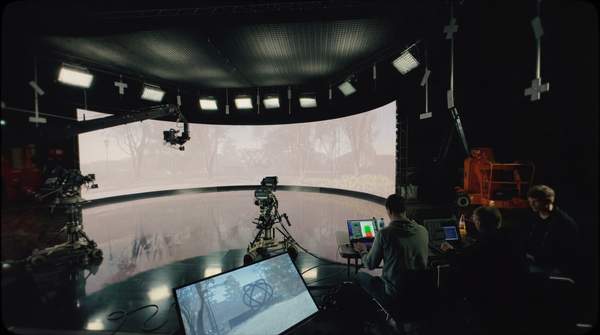
A cinematic scene of a virtual production set with a large LED screen displaying a digital landscape, showcasing the revolution in filmmaking.

Building an 80-foot diameter LED volume for virtual production can cost a studio $8-16 million, excluding labor, a price tag that often dwarfs the entire budget of independent films, according to Copilotco. The $8-16 million investment covers specialized LED panels, advanced rendering hardware, and the integration infrastructure required to create immersive digital environments, making it a high barrier to entry for many.

But virtual production promises democratized creative control and real-time flexibility on set, yet its prohibitive costs and technical demands limit its accessibility to a select few. This tension between creative potential and financial exclusivity defines its current industry impact.

The film industry will likely see a growing divide between productions that can afford cutting-edge virtual production and those that must rely on traditional methods, potentially stifling innovation for smaller creators and widening the gap in production quality.

What is Virtual Production?

Virtual production enables filmmakers to view and manipulate their shots in real-time, often referred to as 'in-camera visual effects,' providing immediate feedback on creative decisions according to Cinedeck. The real-time viewing and manipulation capability allows for instant adjustments to digital environments projected on LED walls, significantly streamlining on-set decision-making.

The main process behind virtual production is the integration of different technologies, including CGI, motion capture, facial recognition, laser scanning, robotics, and Augmented Reality (AR), into one platform. The integration of different technologies is commonly achieved through game engines like Unreal Engine and specialized software such as ILM’s Stagecraft, as detailed by Studiobinder. The technological convergence of CGI, motion capture, facial recognition, laser scanning, robotics, and Augmented Reality allows directors to make instant changes to a scene without waiting for set designers to recreate physical sets or bring in new props, offering unparalleled creative agility. The real-time iteration, allowing instant scene changes, fundamentally shifts the director's role, moving from post-production problem-solving to immediate, on-set creative refinement, which could reshape traditional filmmaking hierarchies.
The Tech Behind the Magic

For a particular Barbeau Observatory set, two bespoke LED Volumes were constructed, including a main 'L' shaped wall measuring 43 meters wide and 6 meters high, alongside a suspended curved wall for a control room window, as reported by FXGuide. The construction of massive, specialized LED volumes and the deployment of high-fidelity screens demand significant engineering and technical expertise, directly contributing to its high cost.

The advanced infrastructure of massive, specialized LED volumes and high-fidelity screens requires substantial upfront investment and a highly specialized crew, placing it out of reach for most independent filmmakers. This creates a technological arms race among major studios, where the financial capacity to adopt these tools becomes a competitive advantage, potentially dictating future narrative and visual trends.

Accessibility and Barriers to Entry

Adapting virtual production (VP) to small-scale environments presents significant challenges, according to Computer. The difficulty of adapting virtual production to small-scale environments extends to educational institutions, with a case study highlighting the challenges of introducing virtual production into the curriculum at Level 5 of the BA course in Digital Film Production at Ravensbourne University London, as published in Journals.uclpress.co.uk. The combined challenges of adapting virtual production to small-scale environments and integrating it into educational institutions suggest that scaling down the technology for broader adoption requires more than just hardware adjustments; it demands a fundamental rethinking of workflows and educational frameworks.

A standing LED stage could cost $35,000-$50,000, but this lower-cost option likely offers limited functionality compared to the $8-16 million full LED volumes, creating a misleading impression of widespread accessibility for complex virtual production techniques. Based on Copilotco's cost estimates of $8-16 million for a full LED volume and $50,000-$75,000 per week for rental, virtual production is not merely expensive; it is actively creating a two-tiered film industry where only the largest studios can afford to innovate at scale, leaving independent filmmakers reliant on traditional, slower methods.

Why This Matters for the Future of Film

Cloud collaboration, virtual production, and automated editing tools collectively form the backbone of modern film workflows, according to Garagefarm. The integration of cloud collaboration, virtual production, and automated editing tools signifies a foundational shift, where digital and physical production elements are increasingly intertwined to redefine the entire filmmaking pipeline, from pre-production to post-production.

Despite Garagefarm's assertion that virtual production is a 'backbone' of modern workflows, the challenges of integrating VP into university curricula, as highlighted by Journals.uclpress.co.uk, and difficulties adapting it to small-scale environments noted by Computer, indicate a significant gap between perceived ubiquity and practical accessibility for the broader industry. While virtual production promises unparalleled creative freedom and efficiency (Cinedeck, Studiobinder), the prohibitive costs and technical demands mean that this freedom is a luxury, not a democratizing force, forcing smaller productions to choose between creative compromise and financial ruin.

Common Questions About Virtual Production

How large is a typical virtual production team?

A large virtual production project typically involves a core team of about 14 people, according to Copilotco. The core team of about 14 people emphasizes the need for highly specialized roles, including real-time artists, technical directors, and virtual art department members, rather than a vast crew.

What is the long-term impact of current training challenges on the virtual production workforce?

The difficulty in integrating virtual production into university curricula, as highlighted by a Ravensbourne University London case study in Journals.uclpress.co.uk, implies a looming talent gap. Without standardized training, the industry risks a shortage of skilled professionals, potentially slowing innovation and increasing reliance on a limited pool of experts, further entrenching the technology's exclusivity.

Under what conditions do the benefits of virtual production become truly transformative?

While virtual production offers enhanced creative control and efficiency, allowing instant scene changes as noted by Studiobinder, its transformative potential is fully realized only when integrated into large-scale, well-funded productions. For smaller projects, the initial investment and specialized talent requirements often outweigh the benefits, making traditional methods more practical despite their limitations.

The Bottom Line: Investing in the Future

By Q4 2026, the continued development of more cost-effective virtual production solutions, such as those offered by smaller stage providers like Copilotco, will be crucial in determining if the technology can truly democratize filmmaking or if it will remain an exclusive tool for high-budget projects.