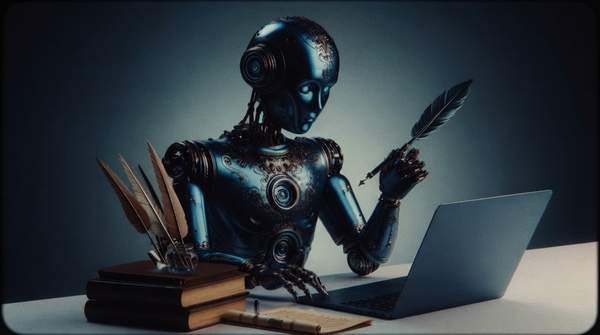
Screenwriter-director Vivek Anchalia crafted 95% of his 75-minute romantic film 'Naisha' using AI tools like ChatGPT and Midjourney. This approach enabled him to produce the film on a budget less than 15% of a traditional Bollywood production. However, the Writers Guild of America (WGA) has established clear rules: AI cannot be considered a writer or produce literary material for its members. Despite these protections, some filmmakers already generate nearly entire films with AI, and showrunners reportedly pressure their teams to integrate these tools. While union safeguards are crucial, AI's economic incentives and creative possibilities will likely drive its continued, often uncredited, integration into filmmaking, deepening the divide between union-protected and independent productions.
The WGA's Line in the Sand: AI is Not a Writer
The Writers Guild of America (WGA) explicitly states that neither traditional nor generative AI (GAI) qualifies as a writer, nor can AI-produced content be considered literary material for its members, according to the WGA. This stance directly protects human authorship and creative ownership. WGA rules further stipulate that any GAI-generated material provided to a writer does not count as assigned or source material for compensation or credit. Crucially, companies cannot mandate AI software use for writing services. These provisions aim to prevent studios from leveraging AI to bypass human writers, ensuring their creative contributions remain valued and compensated. The WGA's clear boundaries establish a legal framework, but their enforcement in practice remains a key challenge as technology evolves.
Beyond the Script: AI's Broader Role in Filmmaking
AI's influence extends far beyond writing, deeply integrating into non-script aspects of film production, especially in Indian cinema. The BBC reports its use for de-ageing actors, voice cloning, and pre-visualization. This widespread adoption confirms AI's permanent place across the filmmaking pipeline. Filmmakers like Jithin Laal use AI for visualizing complex scenes early on, while Arun Chandu leveraged AI tools for a low-budget sci-fi satire. These examples show AI as a vital tool for visual development and production efficiency, making sophisticated filmmaking accessible even on tight budgets. This practical utility means AI will continue to reshape production methods, regardless of union stances on its role in authorship.