Film and Pen
Film & TVContent CreationProductionBooksAdvertising
Film and Pen

Where creativity meets industry: film, TV, books, and media.

Film & TVContent CreationProductionBooksAdvertisingCreators
WritersContactPrivacyTerms
FilmmakingContent CreationAdvertisingFilm IndustryIndependent FilmArtificial IntelligenceAiFilm Production

© 2026 Film and Pen. All rights reserved.

  1. Home
  2. /Production
  3. /What is the pre-visualization process and its benefits in film?
Production

What is the pre-visualization process and its benefits in film?

In 2000, only 3.6% of films featured a pre-visualization credit; by 2019, that number quadrupled to 13.6%, according to Stephenfollows . This expansion reshapes production workflows, shifting critical

VR
Victor Ren

August 24, 2026 · 3 min read

Film director and 3D artist collaborating on a holographic pre-visualization of an action scene, showcasing the integration of technology in modern filmmaking.

In 2000, only 3.6% of films featured a pre-visualization credit; by 2019, that number quadrupled to 13.6%, according to Stephenfollows. The quadrupling of pre-visualization credits reshapes production workflows, shifting critical creative decisions earlier in the pipeline. The increasing prevalence of pre-visualization highlights its value in streamlining complex projects, particularly within large-scale productions.

Pre-visualization introduces an upfront cost and an additional production step, yet it dramatically reduces overall expenses and prevents costly errors during physical filming. The upfront cost and additional production step present a strategic dilemma, especially for smaller projects with limited resources.

As technology advances and production complexities increase, pre-visualization will likely become a standard, expected phase for a broader range of film budgets, fundamentally altering traditional production timelines and roles.

What is Previsualization and How Does it Work?

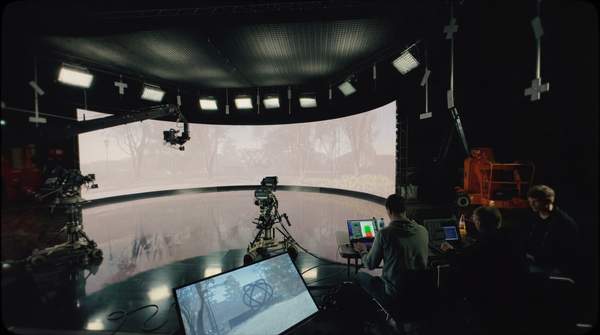
Previsualization involves creating detailed visual representations of scenes before filming, encompassing 2D storyboards, 3D computer graphics, and full animatics, according to GarageFarm. Animatics, animated versions of storyboards, provide a rough sense of motion and timing for complex sequences, enabling early spatial and temporal planning.

Eric Carney, a previs supervisor, describes previsualization as a 'Swiss army knife' that supports every department, not solely visual effects, as reported by Filmustage. Previsualization's broad application positions pre-vis as a versatile blueprint, aiding cinematography, art direction, and even stunt coordination, ensuring creative alignment across the entire production team. Its utility extends beyond mere visualization, becoming a central communication tool.

The Technological Edge: Real-time and Virtual Reality Pre-Vis

Game engines like Unreal Engine and Unity deliver instant photoreal previews, eliminating long render waits and allowing directors to adjust scenes in real time, according to Filmustage. The real-time preview capability accelerates the decision-making process, making iterative creative exploration more feasible and responsive to directorial vision.
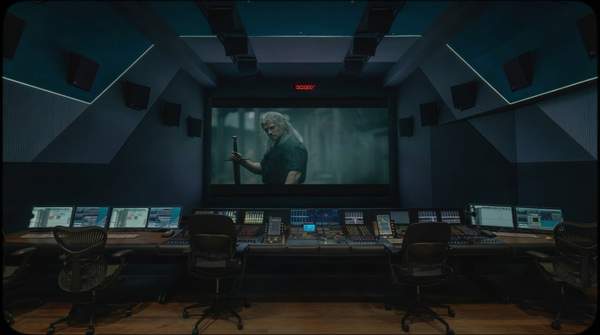
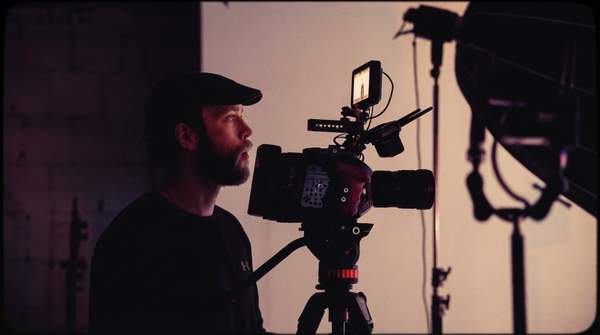
A prototype for previsualization in virtual reality was developed specifically for collaborative purposes, as detailed by Diva-portal. This VR environment allows multiple filmmakers to be present simultaneously, fostering real-time interaction and shared understanding of complex shots. The VR prototype and real-time interaction propel pre-visualization beyond traditional static planning methods, creating a more interactive and immediate creative space that democratizes visual decision-making.

Integrating Pre-Visualization: From Niche to Production Standard

While the number of films using pre-vis did not grow significantly in the past decade, the number of people employed in pre-vis jobs did, according to Stephenfollows. The growth in pre-vis employment confirms films are integrating pre-visualization for longer sequences or entire movies, signaling a deeper, more comprehensive application rather than sporadic use. The integration of pre-visualization for longer sequences or entire movies suggests a maturation of pre-visualization from a specialized tool to a foundational production phase.

Movies costing over $100 million have largely utilized pre-vis since the mid-2000s, with increasing adoption observed in films costing between $50 million and $100 million, reports Stephenfollows. Mid-budget productions now recognize that the long-term efficiencies and clear production roadmap provided by pre-vis outweigh initial expenditures. The recognition by mid-budget productions transforms pre-vis into a strategic investment, no longer a luxury reserved solely for blockbusters, but an essential component for competitive project execution.

The Indispensable Investment: How Pre-Vis Saves Time and Money

Pre-vis requires an initial setup cost, making it less feasible for smaller films; however, it saves money by improving communication and coordination, thus avoiding costly planning errors, according to Stephenfollows. The initial setup cost is offset by significant reductions in later production stages, shifting financial burden from execution to planning.

Previsualization can cut location-related costs by 25-40% of a production budget, as reported by Filmustage. The ability to cut location-related costs by 25-40% confirms pre-vis as a powerful risk-reduction and cost-saving strategy, preventing expensive on-set errors and optimizing resource allocation. The risk-reduction and cost-saving strategy minimizes unforeseen expenditures. Moreover, previsualization enhances efficiency by providing a clear roadmap for the day's filming, ensuring no essential shots are missed and maximizing crew productivity, according to GarageFarm.

Companies that fail to integrate collaborative previsualization tools risk more than budget overruns; they cede creative control and real-time adaptability to competitors. Previsualization is no longer a luxury for blockbusters but a strategic imperative for any production seeking financial prudence and creative precision. The ability to cut location costs by 25-40% transforms it into a non-negotiable investment. By 2026, studios like Marvel and Lucasfilm will likely continue to expand their comprehensive pre-visualization departments, setting a benchmark for efficiency and creative control in large-scale productions and influencing industry-wide adoption.

Related Coverage from Production

  • Top 5 Filmmaking Technologies Revolutionizing Production Workflows
  • Top 6 AI Software Tools for Indie Filmmaker Pre-Production in 2026

Tags

Pre VisualizationFilm ProductionFilmmakingVfx3d AnimationStoryboardingCinematographyPost Production
VR

Victor Ren

Production Writer

As a Production Writer for Film and Pen, Victor Ren covers behind-the-scenes technology, emerging production techniques, and workflows. He focuses on demystifying complex technical processes to make the art of filmmaking accessible to all readers.

More from Production

Filmmaker observing holographic projections of AI-generated film sets and characters in a futuristic studio, symbolizing the impact of AI on low-budget production.

Top 11 Low Budget Filmmaking Production Techniques for 2026

A new AI film studio, Promise, backed by Google and Disney, now utilizes AI models to generate entire film backgrounds, special effects, and synthetic performers, according to The Guardian .

Victor Ren· Aug 24
A line producer intensely focused on a budget spreadsheet, highlighting their critical role in managing independent film finances and production costs.

What is a line producer's role in independent film budget management?

For a $7 million independent film, the line producer's salary might represent just 1% of the total budget, according to StudioBinder .

Victor Ren· Aug 23
Independent filmmaker utilizing advanced AI tools for 3D editing and animation in a futuristic studio setting, showcasing accessible filmmaking technology in 2026.

AI Filmmaking Tools for Independent Producers in 2026

Autodesk Flow Studio's Lite plan now costs just $1 per year, making advanced AI-driven 3D editing and animation accessible to virtually any independent filmmaker, according to Autodesk .

Victor Ren· Aug 22
A state-of-the-art virtual production stage featuring immersive LED screens displaying a detailed digital environment, showcasing advanced filmmaking technology.

What are virtual production stages and their technical requirements?

Reshoots on high-budget films can account for up to 20 percent of the final production cost, a financial burden that virtual production aims to mitigate by shifting creative decisions to pre-productio

Victor Ren· Aug 21

Trending Now

1
AI-generated advertisement visualizes on a digital screen, showcasing superior performance metrics compared to traditional human-designed campaigns.

AI ads outperform human campaigns, reshaping creative roles

Advertising· 6 views
2
A digital marketplace graphic showing Amazon's dominance in the retail ad market, with other platforms struggling to grow.

Retail ad market to surpass $200B, but growth slows outside Amazon

Advertising· 6 views
3
Shadowy figure managing multiple faceless YouTube channels on glowing screens, symbolizing the boom in anonymous content creation and monetization.

Faceless Content Creation's Monetization Boom Challenges Creator Economy Norms

Creators· 5 views
4
Diverse group of LGBTQ+ people joyfully watching screens, celebrating Pride Month with meaningful TV shows and films.

Top 7 LGBTQ+ TV Shows and Films Streaming for Pride 2026

Film Tv· 5 views
5
Animated character Niu Lai showered with gold coins in a cinema that transforms from empty to full, symbolizing a surprising box office success.

Micro-budget 'Niu Lai' earns millions after slow start

Media Industry· 4 views
6
The Blade silhouette stands in a desolate, crumbling landscape, symbolizing the stalled Marvel reboot amidst Disney's financial cutbacks.

Marvel's Blade Reboot Stalled Amid Disney Cutbacks

Film Tv· 4 views