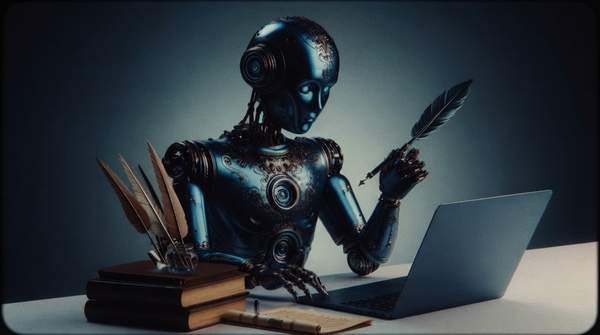
The integration of artificial intelligence (AI) into screenwriting workflows is rapidly transforming how writers approach their craft, offering new tools for ideation, analysis, and refinement. While AI presents opportunities to enhance productivity and creativity, it also introduces significant ethical considerations, particularly concerning copyright, originality, and industry standards set by organizations like the Writers Guild of America (WGA). Screenwriters are increasingly exploring AI tools like ChatGPT and Claude for specific tasks, with industry surveys indicating that between 30% and 40% of working writers have experimented with these technologies. The key for writers is to leverage AI strategically without compromising their unique creative voice or professional standing. The Evolving Landscape of AI in Screenwriting
AI is no longer a futuristic concept in screenwriting; it is actively reshaping workflows. Major word processors are beginning to integrate AI features that offer real-time suggestions, and screenwriting software is anticipated to provide on-the-fly alternatives for story progression after each scene within a few years. This technological shift is not inherently good or bad, but it is a reality that screenwriters must navigate. The Writers Guild of America West, for instance, has addressed AI in its contracts, indicating the industry's recognition of its growing presence. Screenwriter Andy Bobrow, known for his work on shows like *Community* and *Brooklyn Nine-Nine*, views AI primarily as a research tool rather than a creative collaborator, emphasizing that AI relies on patterns and algorithms and cannot write screenplays without extensive programming. The challenge for writers is to understand how to utilize these tools effectively without allowing them to override their creative instincts, ensuring that their writing remains uniquely their own.Practical AI Applications Across the Screenwriting Workflow
AI tools can be integrated into various stages of the screenwriting process, serving as valuable assistants rather than replacements for human creativity. In the earliest stages of writing, AI excels at ideation and world-building. Writers like Beverly Nault and Jessica Brown of the Phoenix Screenwriters Association have experimented with tools such as Claude and ChatGPT for brainstorming new ideas. This application helps generate concepts, outlines, and background details, providing a springboard for a writer's own thoughts.
Beyond initial concept generation, AI can function as a powerful diagnostic tool for script analysis. It can identify plot holes, logic flaws, and inconsistencies within a narrative. Some AI services, such as Greenlight Coverage, offer script coverage that can be compared to human services, providing objective feedback and suggesting improvements for dialogue or scene structures. One screenwriting student described using AI as a way of "talking back and forth with it and trying to get to an idea, almost like leading a writers’ room," highlighting its utility for specific tasks rather than pure creation. This allows writers to refine their scripts by receiving objective feedback and exploring alternative suggestions, ultimately enhancing the quality of their work.Navigating Ethical Considerations: A Decision Framework
Integrating AI into screenwriting requires careful consideration of several ethical dimensions to ensure professional integrity and protect creative rights. The rules and guidelines surrounding AI use are still evolving, making it crucial for screenwriters to stay informed.
Here are key ethical questions screenwriters should consider:
* Ownership and Originality: The question of who owns AI-generated content remains complex. The Phoenix Screenwriters Association advises that as long as the final dialogue and content in a screenplay are a writer's own original work, and they are not directly copying AI-generated text, they are likely within WGA guidelines. The emphasis is on using AI as a springboard for ideas, not as a replacement for original writing.
* Disclosure: Transparency is generally a good practice. If AI tools are used for inspiration during the writing process, screenwriters may consider disclosing this to producers or studios they are working with.
* Maintaining Creative Voice: A core ethical principle is to use AI to enhance, not replace, a writer's unique voice. As Script Reader Pro notes, if a writer hands their entire creative process over to an algorithm, readers and executives will likely detect a lack of human touch. The ability to articulate why a specific perspective makes a story uniquely theirs matters more than technical proficiency with AI tools.
Ultimately, the relationship between AI and creative writing is complex, with human creativity remaining central to the "sacred creative act" that audiences connect with.
WGA Guidelines: Credit, Compensation, and Source Material
The Writers Guild of America (WGA) has established clear guidelines regarding the use of AI in screenwriting, primarily aimed at protecting writers' credit and compensation. According to the WGA West, if a company provides a writer with AI-generated material that has not been previously published or exploited, that material does not count as "assigned material" for compensation purposes or "source material" for determining credits. This means a company cannot give a writer an AI-generated screenplay and pay them a rewrite fee; the writer would be treated as the first writer of the screenplay.
Furthermore, the WGA's provisions ensure that AI-generated content cannot be used to disqualify a writer for separated rights. The WGA also stipulates that while a writer may choose to use AI when performing writing services with company consent and adherence to company policies, the company cannot require the writer to use AI software. Companies are also obligated to disclose to the writer if any materials provided to them have been generated by AI or incorporate AI-generated material. These definitions are crucial for determining credit and residual compensation in the guild contract, safeguarding writers from losing a share of credit or residuals due to AI use, as reported by *Variety* and ABC7 Los Angeles. The WGA also reserves the right to assert that the exploitation of writers’ material to train AI is prohibited by the Minimum Basic Agreement (MBA) or other laws.Maintaining Your Creative Voice in an AI-Assisted World
In an era where AI tools are becoming increasingly sophisticated, the enduring value of human creativity and a writer's unique voice remains paramount. While AI can assist with various tasks, its primary role is to support, not supplant, the core creative act. Screenwriter Andy Bobrow emphasizes that AI functions best as a research assistant, not a creative partner, because it lacks the capacity for genuine creation.
The future of screenwriting is not a competition between humans and AI, but rather a landscape where "humans with AI versus humans without it" will define success, according to Script Reader Pro. The ability to articulate a unique perspective and tell a story that resonates emotionally with an audience is what truly matters. Nobody cares if ChatGPT was used for research; they care if a script evokes genuine feeling. Therefore, screenwriters are encouraged to view AI as a powerful tool that can augment their abilities, streamline their workflow, and provide objective feedback, all while ensuring that the final product is imbued with their distinct vision and human touch. By strategically integrating AI while upholding ethical standards and WGA guidelines, writers can navigate this evolving landscape and continue to craft compelling stories that only they can tell.