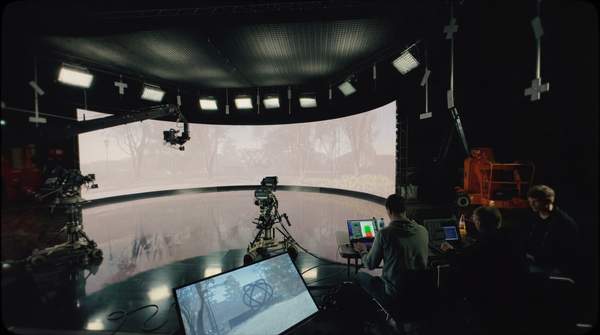
By November 2025, the Saudi Film Commission's JAX Virtual Production Studio will feature 2,720 Sony VERONA LED panels, according to Future Market Insights. This investment marks a global shift towards accessible, high-tech filmmaking, enabling indie creators to leverage advanced production technologies. The studio's capabilities reduce costly post-production revisions by allowing real-time visualization and refinement of digital environments during filming, streamlining workflows.
Historically, high-end production and professional editing tools were prohibitively expensive for indie filmmakers. However, new virtual production studios and AI-native editors now make these sophisticated workflows accessible and cost-effective for a broader range of creators.
The rapid development of AI agent engineering and increasing affordability of virtual production position the indie filmmaking landscape for a significant power shift. Agility and technological adoption will outweigh traditional budget constraints, fundamentally altering access to professional-grade output.
AI: The New Editor's Assistant
AI tools significantly accelerate post-production. Custom AI editing suites now see development times drop from 24 weeks in 2024 to 8–14 weeks in 2026 due to agent engineering, according to Fora Soft. This rapid development enables quicker deployment of tailored solutions, making sophisticated editing capabilities more accessible to a wider market.
1. Virtual Production Systems
Best for: Studios needing real-time visualization and reduced post-production.
The virtual production market is valued at USD 3.7 billion, projected to reach USD 15.5 billion by 2036 with a CAGR of 15.4%, according to Future Market Insights. This technology integrates physical and digital elements on set, allowing real-time visualization of digital environments during filming. This capability inherently reduces costly post-production revisions, fundamentally changing the traditional linear production pipeline into a more iterative, on-set process.