Film and Pen
Film & TVContent CreationProductionBooksAdvertising
Film and Pen

Where creativity meets industry: film, TV, books, and media.

Film & TVContent CreationProductionBooksAdvertisingCreators
WritersContactPrivacyTerms
FilmmakingFilmmakingFilm ProductionVisual StorytellingAiAdvertisingMarketingContent Creation

© 2026 Film and Pen. All rights reserved.

  1. Home
  2. /Film & TV
  3. /How to Adapt Novels for Screenwriting and Directing: A 2026 Guide
Film & TV

How to Adapt Novels for Screenwriting and Directing: A 2026 Guide

In 2013 and 2014, not a single one of the top 10 highest-grossing movies was an original screenplay, marking a profound shift towards adaptations that has only accelerated since, according to Talevent

JM
Julian Mercer

August 11, 2026 · 4 min read

A visual representation of adapting novels into films, showing books transforming into a movie set with a director's chair and camera.

In 2013 and 2014, not a single one of the top 10 highest-grossing movies was an original screenplay, a trend that has continued in subsequent years, marking a profound shift towards adaptations that has only accelerated since, according to Taleventry. revealing a clear industry preference for existing intellectual property over new concepts. Streaming platforms, accounting for 53% of worldwide commissions, now prioritize adaptations, seeking to engage audiences and mitigate financial risk.

The demand for novel adaptations soars, but translating a complex narrative from page to screen remains a highly nuanced, challenging endeavor. a tension that defines much of contemporary Hollywood's creative work.

Studios increasingly invest in sophisticated analytical tools and established methodologies to de-risk adaptations. a pursuit of 'proven' narratives that often leads to formulaic, creatively diluted products, rather than guaranteed successes.

The Adaptation Gold Rush: Why Novels Dominate Screens

Upcoming projects for 2026 underscore the entertainment industry's dedication to novel adaptations. Rufi Thorpe’s novel Margo's Got Money Troubles premieres as an eight-episode series on April 15, 2026. A psychological thriller inspired by John D. MacDonald’s novel, Cape Fear, arrives on June 5, 2026, as a 10-episode series. A new series inspired by William Golding's classic, Lord of the Flies, is scheduled for May 4, 2026. Marissa Stapley’s novel Lucky becomes a limited series premiering on July 15, 2026, and Christopher Nolan's adaptation of Homer's The Odyssey is slated for release on July 17, 2026.

This sheer volume of announced adaptations suggests an industrial-scale content pipeline, spanning contemporary novels to timeless classics. The drive to secure 'proven' intellectual property often prioritizes quantity and perceived safety over genuine creative innovation or careful narrative translation. The implication is a market saturated with familiar stories, potentially at the cost of original vision.

From Page to Screen: The Core Creative Process

Translating a novel to a screenplay often begins by identifying the most memorable parts of the original text. One technique, according to Writing-World, involves reading the book, setting it aside, then recalling the story's enduring through-line. an initial distillation, focusing on core emotional and plot beats, that forms the bedrock for cinematic interpretation.
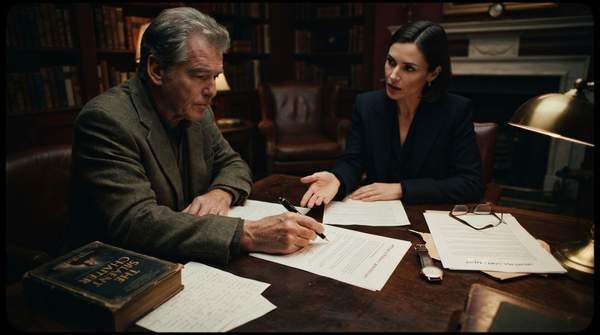
Further condensing narratives for film involves identifying essential plot points, combining or eliminating secondary characters, using montages, restructuring the narrative, and developing visual or auditory cues, according to Fiveable. Together, these methods emphasize a strategic distillation of the source material, prioritizing narrative impact and visual storytelling over literal translation. demanding complex creative decisions that resist purely data-driven optimization, implying that the human element remains paramount.

The Fine Line: Challenges in Defining and Executing Adaptations

The very definition of an 'adaptation' remains fluid and contested within the industry. 'O Brother, Where Art Thou?' earned a Best Adapted Screenplay nomination despite its acknowledged 'loose connection' to Homer's 'Odyssey,' as noted by Hudsonreview. a case that reveals the subjective nature of the craft, where inspiration can blur into direct adaptation, challenging traditional categories.

The blurred lines between inspiration and direct adaptation underscore the subjective nature of the craft and the ongoing debate about fidelity versus creative interpretation. an ambiguity that complicates the industry's ability to consistently identify or replicate 'proven narratives,' suggesting that content creators operate on a shaky conceptual foundation. The implication is that even the 'safe bet' of adaptation carries an inherent, undefinable risk.

Modern Approaches: Leveraging Data to Deconstruct Adaptation

Advanced analytical methods increasingly seek to de-risk content creation by understanding the adaptation process. A study, detailed by Ai Stonybrook, investigated 40 book-film adaptations to analyze screenwriters' decision-making processes, aiming to quantify successful adaptation. employing Natural Language Processing (NLP) techniques and a text alignment method from bioinformatics to systematically deconstruct the screen adaptation process.

These sophisticated tools offer new ways to analyze successful adaptations, potentially providing data-driven insights for future projects. Yet, the subjective and complex nature of translating narratives means a purely data-driven approach is unlikely to guarantee success. highlighting a fundamental disconnect between analytical ambition and creative execution, suggesting that art may always elude complete quantification.

Frequently Asked Questions About Adaptations

What are the key challenges in adapting a novel for film?

A significant challenge involves externalizing internal character thoughts and sensory descriptions. Prose conveys these easily; screen requires visual or auditory equivalents. Condensing a novel's extensive timeline and multiple subplots into a two-hour film also presents a formidable hurdle, demanding difficult choices about what to retain or discard.

How do screenwriters approach character development from a novel?

Screenwriters translate detailed character descriptions and inner monologues into outward actions and dialogue. They might combine minor characters or invent scenes to highlight core traits, ensuring a clear, impactful arc within the film's condensed narrative structure.

What directorial choices are crucial when adapting literature to the screen?

Directors make crucial choices regarding visual style, pacing, and overall tone to capture the novel's essence. This includes decisions on cinematography, production design, and musical score, all contributing to the audience's experience of the story's emotional and thematic resonance, translating the author's voice into a distinct cinematic language.

If the industry continues its aggressive reliance on novel adaptations, prioritizing data-driven de-risking over creative interpretation, it will likely yield more commercially viable content, but perhaps at the cost of genuine cinematic originality.

Related Coverage from Film & TV

  • Seattle, Philadelphia, New York offer film production opportunities
  • Film Production Tech Innovations Changing How Movies Are Made
  • film
  • What Are Creepypastas and How Are They Adapted for Film?
  • Paramount
  • What Are LED Volumes Filmmaking
  • streaming
  • virtual
  • upcoming

Tags

ScreenwritingDirectingNovel AdaptationFilmmakingHollywoodStreaming PlatformsIntellectual Property
JM

Julian Mercer

Film Editor

Julian Mercer is a Film Editor at Film and Pen, covering film, television, and the indie film industry with a focus on storytelling craft. He brings a cinematic eye to dissecting narrative structure and visual storytelling.

More from Film & TV

A cinematic split image contrasting silent film era visuals with modern sound film production, illustrating the evolution of visual storytelling in filmmaking.

What Are Visual Storytelling Principles in Filmmaking?

The average cost of a film nearly doubled between 1927 and 1929, not for grander visual effects, but primarily due to the industry's rapid transition to 'talkies', according to Filmustage .

Julian Mercer· Sep 7
The Creative Arts Emmy Awards stage with golden statuettes, highlighting the dominance of streaming services and the success of FX's Shōgun.

Creative Arts Emmys award streamers and legacy shows

FX's Shōgun achieved a significant milestone at the Creative Arts Emmy Awards this weekend, securing 14 wins.

Julian Mercer· Sep 7
An empty living room with a television displaying streaming logos, representing the decline of the traditional fall TV season.

Streaming's dominance diminishes fall TV season's relevance.

Last September, for the first time in over 70 years, no single broadcast network premiere drew more than 5 million live viewers, a stark contrast to the 20-30 million regularly achieved just two decad

Julian Mercer· Sep 7
Golden Emmy statuettes gleaming under spotlights, symbolizing the nominations and anticipation for the upcoming awards ceremony.

Creative Arts Emmy Awards nominations signal early awards season frontrunners

HBO Max's 'Hacks' shattered expectations at the 76th Creative Arts Emmy Awards, securing 24 nominations and setting a new single-year record for a comedy series.

Julian Mercer· Sep 6

Trending Now

1
Diverse group of aspiring filmmakers working together in a bright, modern film studio with advanced equipment, symbolizing opportunity and creativity.

AFI names 2026-27 Canva Fellowship recipients at Conservatory

Production· 6 views
2
A Deep Dive Into Amir Saranga’s Multi-Platform Creator Ecosystem

A Deep Dive Into Amir Saranga’s Multi-Platform Creator Ecosystem

Production· 10 views
3
Silicon Heartbeats Earns Early Critical Praise for Blending Startup Detail With Personal Consequence

Silicon Heartbeats Earns Early Critical Praise for Blending Startup Detail With Personal Consequence

Books· 4 views
4
Diverse creators collaborating with AI sound waves, symbolizing global accessibility and innovation in content creation.

Seed Audio 1.0 Features Enhance Accessibility for 20 Languages

Content Creation· 4 views
5
Futuristic media planning control room with holographic displays showing AI-driven insights, incrementality metrics, and revenue growth projections, with a diverse team collaborating.

What is the role of a media planner in 2026 advertising?

Advertising· 4 views
6
A screenwriter interacting with a holographic AI interface that visualizes a story web, symbolizing AI's role in revolutionizing screenwriting and story development.

AI Tools for Screenwriting Revolutionizing Story Development

Film Tv· 7 views