Investment in AI video and media startups surged over 43% last year, reported by Gulf Today. Yet, legendary directors like Guillermo del Toro declare they'd 'rather die' than use generative AI. This financial influx exposes a stark industry divide. While investment in AI and virtual production skyrockets due to efficiency, some respected directors vehemently reject these technologies. James Cameron described AI actors as 'horrifying,' according to Gulf Today. The tension between financial influx and directorial rejection signals a deeper conflict.
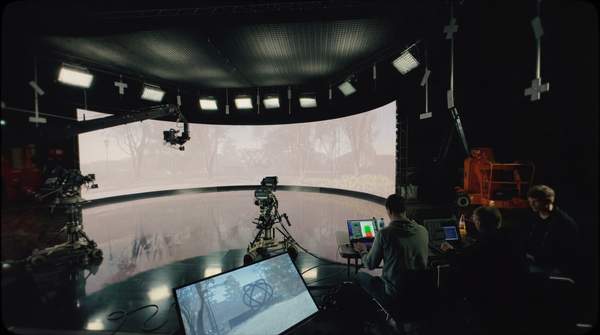
The film industry faces a fundamental workflow transformation. Its full adoption will be shaped by a generational divide between those embracing efficiency and those prioritizing traditional artistic integrity. Virtual production, which merges real-time 3D rendering, high-performance LED display technology, camera tracking, and artificial intelligence, as detailed by Cgw, exemplifies this pivot. Darren Aronofsky's AI studio, Primordial Soup, raising $15 million in equity, further confirms this shift.
Efficiency and Creative Expansion
1. Virtual Production
Best for: Studios and production companies seeking comprehensive cost reductions and creative control.
Virtual production renders backgrounds and effects live during filming, reducing post-production time, as reported by Cgw. This allows content variations for different regions (APAC, EMEA, North America) within a single session. TV spots produced with these tools can cost 30% to 40% less than traditional methods, according to Deloitte. This efficiency drives rapid adoption: over 40% of media and enterprise executives already use virtual production, with more than half planning to adopt within 18–24 months, per Cgw. The rapid adoption, with over 40% of media and enterprise executives already using virtual production and more than half planning to adopt within 18–24 months, indicates a swift industry-wide transition toward more agile, cost-effective content creation.
Strengths: Significant cost savings; real-time visual feedback; expanded creative flexibility. | Limitations: High initial setup investment; requires specialized technical expertise. | Price: Varies significantly based on scale and components.
2. LED Wall Systems for Virtual Production
Best for: Productions requiring immersive, dynamic backgrounds and real-time environment changes.
LED wall systems form the visual core of virtual production stages. Costs range from $50,000 for small 8–15 m² indie setups to over $15 million for Hollywood-scale stages exceeding 200 m², according to Royal Display. This scalability allows both independent creators and major studios to leverage immersive environments.
Strengths: Immersive environments; eliminates extensive green screen; dynamic lighting. | Limitations: High capital expenditure; complex technical integration. | Price: $50,000 to over $15 million depending on scale and quality.
3. Real-time 3D Rendering
Best for: Creative teams needing immediate visual feedback and interactive scene development.
Real-time 3D rendering is a core virtual production component, integrating with LED displays, camera tracking, and AI, as noted by Cgw. Workstations for this range from $40,000 to $250,000, according to Royal Display. This technology significantly accelerates creative iteration and decision-making on set.
Strengths: Instant visual iteration; live integration with physical sets; accelerates decision-making. | Limitations: Requires powerful hardware and specialized software. | Price: Workstation costs $40,000–$250,000.
4. Camera Tracking Systems
Best for: Ensuring seamless integration between physical cameras and virtual environments.
Essential for virtual production, these systems work with real-time 3D rendering, LED displays, and AI, according to Cgw. A complete system costs $20,000 to $120,000, according to Royal Display. This precision is critical for achieving high visual fidelity and audience immersion in virtual sets.
Strengths: Precise camera movement replication; realistic parallax; enhances immersion. | Limitations: Technical calibration required; adds complexity to set operations. | Price: System costs $20,000–$120,000.
5. Artificial Intelligence in Film
Best for: Automating creative tasks, generating content, and enhancing production workflows.
AI is a core component integrated into virtual production, alongside rendering, LED displays, and camera tracking, as stated by Cgw. Investment in AI video and media startups surged over 43% year over year, according to Gulf Today. The financial commitment, exemplified by Director Darren Aronofsky's AI studio Primordial Soup raising $15 million in equity, marks a strategic pivot towards AI-driven creative and production pipelines.
Strengths: Automation of repetitive tasks; new creative possibilities; increased efficiency. | Limitations: Ethical concerns; potential for job displacement; creative control debates. | Price: Varies by software and service; significant investment in dedicated studios.
6. Generative AI
Best for: Rapid prototyping, concept art generation, and exploratory content creation.
Generative AI tools produce images, video, and text from simple prompts. Director Neill Blomkamp released a sci-fi short generated via Seedance 2.0 prompts, as reported by Gulf Today. Conversely, Guillermo del Toro stated he would 'rather die' than use generative AI, according to Gulf Today. The contrasting stances of Neill Blomkamp and Guillermo del Toro highlight the profound artistic resistance and philosophical divide within the industry.
Strengths: Fast content generation; reduces initial conceptualization time; expands creative range. | Limitations: Quality control; ethical concerns regarding authorship; strong artistic opposition. | Price: Varies by platform and subscription model, with free tiers to enterprise licenses.
7. AI Actors
Best for: Background characters, digital doubles, or experimental narrative forms.
AI-generated performers remain highly controversial. James Cameron described AI actors as 'horrifying,' according to Gulf Today. This technology raises profound questions about performance authenticity and the future role of human talent, likely sparking ongoing ethical and labor debates.
Strengths: Cost-effective for certain roles; eliminates scheduling conflicts; consistent performance. | Limitations: Lacks human nuance; strong ethical and artistic objections; legal complexities. | Price: Pricing models are still emerging, often based on usage or character complexity.