Film and Pen
Film & TVContent CreationProductionBooksAdvertising
Film and Pen

Where creativity meets industry: film, TV, books, and media.

Film & TVContent CreationProductionBooksAdvertisingCreators
WritersContactPrivacyTerms
Artificial IntelligenceContent CreationFilmmakingMedia IndustryFuture Of WorkFilm ProductionFilmmakingEconomic Impact

© 2026 Film and Pen. All rights reserved.

  1. Home
  2. /Creators
  3. /What Are Digital Content Creators' IP Rights in 2026?
Creators

What Are Digital Content Creators' IP Rights in 2026?

Even with copyright automatically protecting their work for life plus 70 years, digital creators face a stark reality: enforcing those rights across international borders is often "difficult across di

TC
Tara Collins

August 15, 2026 · 3 min read

A digital creator contemplating their intellectual property rights at a symbolic crossroads of international borders and digital landscapes.

Even with copyright automatically protecting their work for life plus 70 years, digital creators face a stark reality: enforcing those rights across international borders is often "difficult across different jurisdictions due to varying legal frameworks" (abacademies). This means their intellectual property rights, designed to safeguard digital content, can dissolve at national borders, leaving work vulnerable to widespread, unpunished infringement. The internet's borderless nature clashes directly with territorial laws, severely hampering enforcement. As digital content globalizes and circumvention technologies and AI advance, individual creators will likely find their IP increasingly vulnerable unless significant international legal harmonization or new enforcement paradigms emerge.

The Illusion of Border Protection for Digital Content

In 2026, protecting digital content reveals a disconnect: strong national laws exist, but their global application is limited. Enforcement against digital piracy is "difficult across different jurisdictions due to varying legal frameworks," according to abacademies. This means theoretical copyright strength rarely translates to practical security. Creators relying solely on national protections like Section 1201 operate under a dangerous illusion; their rights effectively end at their country's border.

The Digital Shield: Understanding Copyright's Core Protections

Despite global hurdles, specific legal provisions secure digital works nationally. Section 1201 of the Digital Millennium Copyright Act (DMCA) prohibits circumventing technological protection measures (TPMs), notes Copyright. This shows copyright's proactive stance within the U.S. However, robust domestic protection is hampered by the internet's borderless nature and inconsistent international legal parity, undermining cross-jurisdictional enforcement.

Beyond Circumvention: The Broad Reach of Anti-Piracy Laws

Section 1201 also prohibits manufacturing, importing, offering, or trafficking in circumvention technologies, products, or devices, according to the digital millennium copyright act | u.s. copyright office. This aims to cut off the supply chain for piracy tools. Yet, while the US tries to control these tools, globalization exposes IP to infringement in countries with weaker laws, as Abacademies points out. The global market ensures these tools can still be developed and used from jurisdictions with laxer laws, making domestic prohibitions largely symbolic.
The AI Frontier: New Monopolies and Stifled Innovation

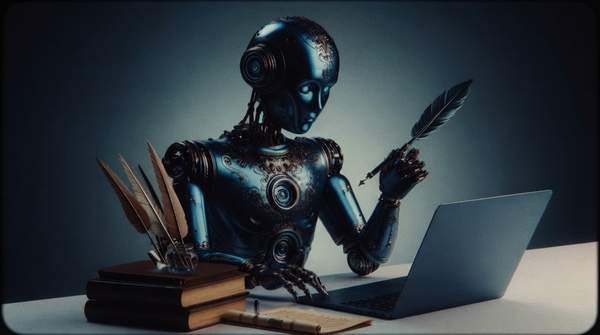
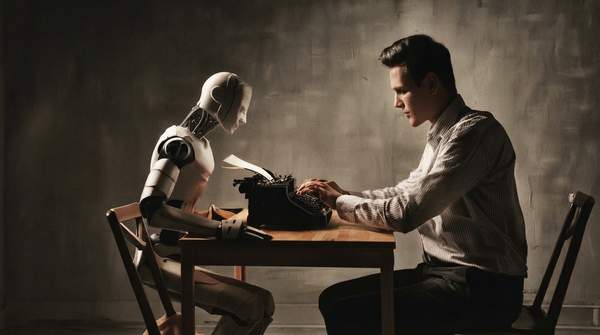
AI introduces a new dimension to IP protection, especially for patents. AI patents could "monopolize certain technologies, potentially stifling further innovation and limiting access for smaller firms or developing countries," states abacademies. This means innovations meant for IP protection might become exclusive tools for the powerful, further disadvantaging smaller creators in the global fight against infringement.

The Global Gauntlet: Why Digital IP Enforcement Falls Short

Despite robust national laws, the internet's borderless nature hinders effective IP enforcement. Globalization exposes IP to infringement in countries with weaker or differing legal protections, complicating cross-border trade, as abacademies notes. Even if a creator wins an infringement case in one country, the content can still be freely distributed from another jurisdiction with minimal legal consequence.

Navigating Exceptions: When Can Anti-Circumvention Rules Be Bent?

What are the main types of IP for digital content?

Digital content is primarily protected by copyright, covering original creative works like art, music, and software. Trademarks protect branding elements such as logos. Patents, particularly in AI, protect novel inventions and processes, impacting content creation tools, according to Abacademies.

What is fair use in digital content creation?

Fair use allows limited use of copyrighted material without permission for purposes like criticism, commentary, news reporting, teaching, scholarship, or research. This is evaluated based on four factors: purpose and character of use, nature of the copyrighted work, amount and substantiality used, and effect on the market, as outlined by Copyright.

The Evolving Battle for Digital Rights: A Call for Adaptation

The current IP legal framework is strained by rapid tech advancement and global digital content reach. The triennial rulemaking for Section 1201, establishing temporary anti-circumvention exemptions, shows a legal system struggling to adapt to instantaneous, borderless digital piracy and AI-driven content manipulation, as Copyright notes. Independent creators must develop proactive strategies beyond national laws to safeguard their work.

By Q4 2026, many independent creators will likely need to explore decentralized content registries or blockchain-based timestamping services to establish verifiable proof of ownership across jurisdictions, as traditional legal enforcement faces persistent challenges, leaving their work highly susceptible to unpunished infringement in the global digital arena without such adaptation.

Related Coverage from Creators

  • AI Brand Safety: Protecting Your Brand in 2026
  • Top 7 Independent Films That Changed Hollywood This Decade
  • What are the legal and
  • Books Flood Amazon, Devaluing Human
  • Digital Copyright: Understanding Your Rights and Challenges

Tags

Digital ContentIntellectual PropertyCopyright LawCreators Rights2026 TrendsInternational LawAi And Ip
TC

Tara Collins

Content Creation Writer

Tara Collins covers content creation and digital media trends for Film and Pen, focusing on creator workflows and social media strategy. Her writing provides actionable insights and practical guidance to help modern creatives navigate the evolving digital landscape.

More from Creators

A hyper-realistic AI actor on a film set, questioning the future of human performers in the entertainment industry.

What are the ethical considerations for AI actors in film and TV?

Netflix has stated it used AI in 300 of its 1,000 titles in 2026, a stark indicator of how deeply artificial intelligence is already embedded in Hollywood's production pipeline.

Tara Collins· Sep 11
A film editor intensely focused on a screen, manipulating film clips to craft a narrative and evoke emotion, symbolizing the power of editing.

How Film Editing Techniques Shape Narrative Pacing and Emotion

In Alfred Hitchcock's 'Psycho' (1960), the iconic shower scene used 78 pieces of film in approximately 45 seconds, according to Openculture .

Julian Mercer· Sep 11
A split image showing a traditional Hollywood film set on one side and a futuristic AI control room with a digital character on the other, symbolizing the impact of AI on creative jobs.

AI Devalues Hollywood Creative Expertise

At the Zurich Film Festival, AI talent studio Xicoia unveiled Tilly Norwood, a photorealistic AI-generated character.

Tara Collins· Sep 10
A writer's study with a typewriter, symbolizing the creative legacy of Jeff Lowell, writer of John Tucker Must Die.

Jeff Lowell's Sharp Wit Lives On Through John Tucker Must Die

Jeff Lowell, the sole credited writer behind the 2006 revenge comedy John Tucker Must Die and a key creative force behind Netflix's The Crew , died on August 24 at 52 after a brief illness, Deadline r

Tara Collins· Sep 9

Trending Now

1
KakiFreeCredit Shows What to Compare Before You Claim Free Credit in Malaysia

KakiFreeCredit Shows What to Compare Before You Claim Free Credit in Malaysia

Advertising· 7 views
2
A Deep Dive Into Amir Saranga’s Multi-Platform Creator Ecosystem

A Deep Dive Into Amir Saranga’s Multi-Platform Creator Ecosystem

Production· 8 views
3
Futuristic control room visualizing CTV viewership data and attribution models, highlighting the complexity of marketing measurement.

New CTV Measurement Tools & Attribution Models

Advertising· 6 views
4
A film set with a large LED wall displaying a vibrant alien planet, with actors and crew working in front of the immersive digital backdrop.

What Are Virtual Production LED Walls?

Behind The Scenes· 7 views
5
The Macedonian comedy 'DJ Ahmet' is prominently featured with multiple nominations for the Adriatic Film Awards, following its Sundance success.

Macedonian comedy 'DJ Ahmet' leads Adriatic Awards nominations

Film Tv· 5 views
6
Diverse content creators using a futuristic AI interface to generate and edit videos, showcasing the power of affordable AI video generation tools.

Cost-Effective AI Video Generator Empowers Content Creators

Content Creation· 6 views