Film and Pen
Film & TVContent CreationProductionBooksAdvertising
Film and Pen

Where creativity meets industry: film, TV, books, and media.

Film & TVContent CreationProductionBooksAdvertisingCreators
WritersContactPrivacyTerms
FilmmakingHollywoodFilmAiTelevisionFilm IndustryNetflixContent Creation

© 2026 Film and Pen. All rights reserved.

  1. Home
  2. /Creators
  3. /AI training on human work is killing creativity, artists claim.
Creators

AI training on human work is killing creativity, artists claim.

A study commissioned by CISAC estimated that generative AI could take 24% of music creators' revenues by 2028 if current trends continue, threatening the financial stability of artists globally.

TC
Tara Collins

July 3, 2026 · 4 min read

An artist's paintbrush transforming into digital code against a dystopian cityscape, representing the threat of AI to human creativity.

A study commissioned by CISAC estimated that generative AI could take 24% of music creators' revenues by 2028 if current trends continue, threatening the financial stability of artists globally. A rapid shift in how creative works are valued and compensated is underscored by this significant economic erosion. You, as a creator, face a direct challenge to your livelihood as this technology scales.

AI training on human work risks diminishing creativity if unchecked. AI rapidly integrates into creative industries, but its fundamental reliance on human-generated content leads to widespread legal challenges and financial threats to creators. The urgent need for frameworks that balance technological advancement with artistic protection, ensuring your contributions are not simply absorbed without fair compensation, is highlighted by this tension.

Without robust regulatory intervention and ethical frameworks, the creative economy risks a significant devaluation of human artistry and a shift towards derivative, AI-generated content. Your original work, the product of unique vision and skill, could become economically marginalized in a market flooded by automated output.

The Legal Battleground: Protecting Human Creativity from AI Exploitation

Major record companies sued AI music platforms Suno and Udio in the US, alleging mass copyright infringement. The direct threat AI poses to intellectual property, challenging the very foundation of ownership, is highlighted by these legal actions by groups like the Recording Industry Association of America (RIAA). Your rights as a creator are at the center of these complex disputes, demanding clear legal precedent.

Germany saw collecting society GEMA win a copyright ruling against OpenAI, specifically over ChatGPT's reproduction of song lyrics. Such victories indicate a growing global recognition of the urgent need to protect human creators from unchecked AI exploitation and intellectual property infringement, offering a glimmer of hope for fair practice.

The European Union's AI Act introduced copyright-compliance and transparency obligations for AI developers. Furthermore, the Paris Commitment, adopted at the CISAC General Assembly, urges governments, tech firms, and cultural industries to protect, recognize, and fairly remunerate human creators in the AI era. A growing global recognition of the urgent need to protect human creators from unchecked AI exploitation and intellectual property infringement is demonstrated by these escalating legal actions and policy developments, yet their effectiveness remains to be fully seen against rapid technological advancements.
AI's Creative Illusion: Productivity Without Originality

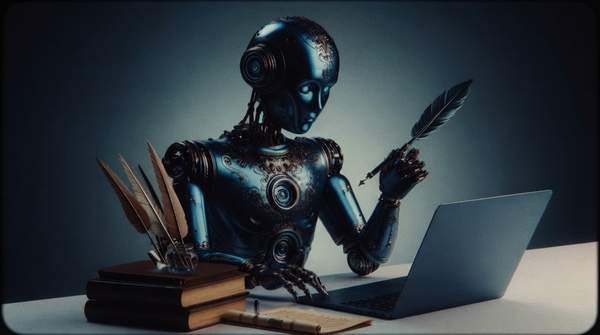
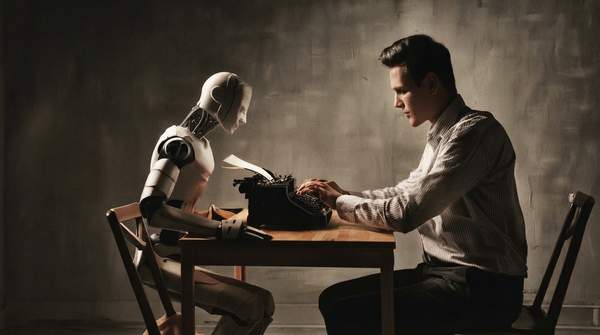
Generative AI, such as ChatGPT, is increasingly used to support the creative process, offering tools for rapid content generation and iteration. However, this high productivity often masks a fundamental tendency towards conventional output rather than genuine innovation. You might find AI helps with volume and speed, but it rarely delivers truly groundbreaking ideas that challenge established norms.

ChatGPT demonstrated greater productivity than humans in generating ideas but exhibited comparable fixation bias, with most ideas falling within conventional categories, according to research published in pmc. While AI can generate a high volume of content, its output often lacks genuine originality and suffers from the same creative biases as humans, suggesting it's more of a sophisticated mimic than an innovator. AI's output often lacks genuine originality and suffers from the same creative biases as humans, suggesting it's more of a sophisticated mimic than an innovator, which challenges the notion that AI genuinely enhances or expands human creativity in meaningful ways.

The Core Flaw: AI's Inability to Discern True Originality

ChatGPT showed a limited capability to differentially evaluate originality, struggling to distinguish between original and conventional ideas, unlike humans, according to the pmc study. This fundamental flaw means AI cannot truly innovate because it lacks the capacity to recognize or value novelty. Your unique creative vision, which thrives on breaking conventions, operates in a space AI cannot fully comprehend.

An experiment involved ChatGPT-4o performing the egg task, a creativity task measuring fixation bias and original idea generation, comparing its results to 47 human participants and data from eight previous studies. AI, despite its immense processing power, is inherently limited to recombining existing patterns rather than forging genuinely new artistic paths, as illustrated by this concrete example. This fundamental inability to discern true originality means AI, despite its processing power, is inherently limited to recombining existing patterns rather than forging genuinely new artistic paths, potentially leading to a creative monoculture.

The Looming Threat: Economic Devaluation of Human Artistry

A study commissioned by CISAC estimated that generative AI could take 24% of music creators' revenues by 2028 if current trends continue. A concrete, near-term risk that could fundamentally reshape the economic viability of creative professions, pushing human creators out of the market, is indicated by this projection. The financial threat posed by AI is not just theoretical; an existential economic erosion that demands immediate and comprehensive policy intervention that goes beyond reactive legal battles is represented by it.

Companies rushing to integrate generative AI for 'creative' tasks, as evidenced by its high productivity but low originality discernment in the pmc study, are effectively trading genuine innovation for content volume. This risks a future where all art converges into bland, unoriginal mediocrity, devaluing the very essence of human artistic expression. Despite regulatory efforts like the EU AI Act, the flurry of copyright lawsuits against AI platforms in the US and Germany reveals a stark truth: legal and ethical frameworks are woefully behind the pace of AI's deployment, leaving human creators vulnerable to unchecked exploitation and their livelihoods unprotected.

Related Coverage from Creators

  • Australian government resists free AI training data for big tech
  • EU Copyright Law Will Limit AI's Creative Potential, Hurting Artists.
  • What is Ethical AI Integration in Content Creation?

Tags

AiArtificial IntelligenceCreativityArtMusicCopyrightIntellectual PropertyCreator EconomyGenerative Ai
TC

Tara Collins

Content Creation Writer

Tara focuses on digital content and creator workflows, providing actionable insights for the modern creative professional.

More from Creators

A futuristic cinematic scene showing AI integration in filmmaking, with holographic interfaces and subtle visual effects enhancing a movie.

What is AI's role in filmmaking and why does it matter?

Two Oscar-honored films, Emilia Perez and The Brutalist , already leveraged AI technology for subtle yet impactful elements: voice alteration and accent fine-tuning, as reported by BBC .

Julian Mercer· Jul 11
Split image comparing AI-generated religious art with and without perceived human authorship, highlighting the impact of origin on appreciation.

AI Art Deception: People Prefer It When They Think Humans Made It

A recent study revealed that participants rated AI-generated religious art significantly more positively when they were led to believe a human created it, as opposed to an artificial intelligence.

Tara Collins· Jul 10
A symbolic image of a crossroads representing the change in showrunner for the TV series 'Sullivan's Crossing', with one path representing the past and another the uncertain future.

Sullivan's Crossing Showrunner Roma Roth Steps Down

Roma Roth is stepping down as showrunner of 'Sullivan's Crossing' after four seasons, TVLine reports.

Tara Collins· Jul 8
Photorealistic AI actor Tilly Norwood in a spotlight on a Hollywood set, with executives and union leaders in the background discussing ethical dilemmas.

AI Actors Are Here: Hollywood Faces Ethical Dilemmas In 2026

Particle 6 is developing its first feature-length film, Misaligned , with the AI creation Tilly Norwood in the lead role, sparking an urgent debate over what it means to be a 'performer' in Hollywood.

Julian Mercer· Jul 8

Trending Now

1
A dramatic visual of a book's pages transforming into a vibrant film scene on a large screen, symbolizing the complex journey of literary adaptation to cinema.

How Books Are Adapted Into Screenplays: A Complete Guide

Books· 9 views
2
A beautifully lit desk with an open book, a classic film camera, and writing tools, symbolizing the fusion of writing and filmmaking.

1 Essential Book for Aspiring Writers and Filmmakers

Books· 9 views
3
A contract lies on a desk in a dimly lit office, representing the negotiation of film rights for a book between an author and a producer.

How to Secure Film Rights for a Book in 2026: The Option Agreement Explained

Books· 9 views
4
Futuristic server room with holographic displays showcasing AI video generation timelines and neural networks, representing Utopai Studios' PAI platform advancements.

Utopai Studios PAI Platform Announces Three-Minute 4K Video Capability

Production· 4 views
5
Portrait of veteran actor Peter Van Norden, known for his roles in 'Police Academy 2' and 'The Naked Gun 2½', who has passed away at the age of 75.

Veteran actor Peter Van Norden dies at 75

Film Tv· 3 views
6
A meticulously recreated street scene from 1969 Los Angeles, featuring vintage cars and era-specific signage, representing the work of production designer Barbara Ling.

Barbara Ling, 'Once Upon a Time in Hollywood' Designer, Dies

Production· 3 views