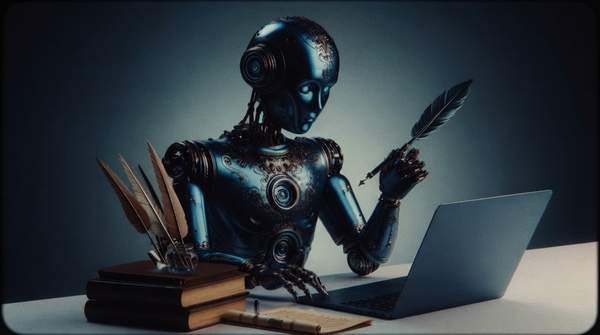
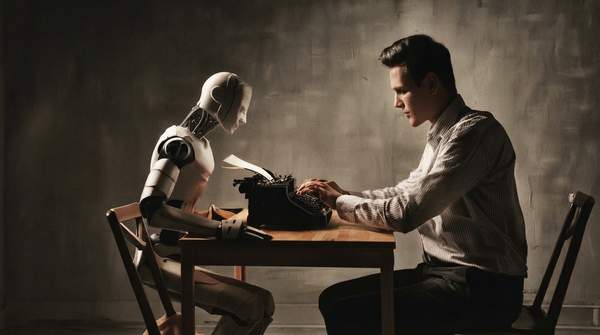
The New York Times cut ties with a freelance journalist for using AI to write a book review, signaling a stark new reality for creative professionals. This incident, reported by Independent Co Uk, confirms that even 'good enough' AI-aided work is now a career liability, forcing creators to redefine their value.
AI tools rapidly boost creative output and efficiency, yet consistently struggle to generate truly original ideas or distinguish between conventional and novel concepts. This tension defines the modern creative landscape.
Consequently, companies and individual creators will differentiate themselves not by sheer output, but by uniquely human capacities: strategic insight, genuine originality, and nuanced taste that AI cannot replicate. AI isn't just raising the bar; it's destroying the market for human mediocrity. To thrive, creators must deliver truly original, strategic insights, cultivating distinctive skills that transcend automation, as reported by Independent Co Uk.
The Efficiency Engine: Automating the Conventional
OpenAI's new AI-powered Creative Tools allow users to generate, modify, and optimize advertising creatives, demonstrating AI's immediate impact on creative workflows. This capability offers businesses a clear path to high-volume content production at unprecedented speed.
A 2025 study using ChatGPT-4o on the 'egg task' found it more productive than 47 human participants, according to pmc.ncbi.nlm.nih.gov. AI's superior efficiency in idea generation means tasks once requiring significant human effort are now automated, challenging the value of merely competent creative work.
David Droga, an advertising leader, claims 80% of marketing and advertising professionals are not exceptional, as reported by Semafor. This, combined with AI's rapid, competent output and superior productivity in tasks like the 'egg task,' means the market for merely sufficient human creative work is eroding fast. High-volume, conventional content will be abundant, making most current creative roles vulnerable to automation. Human creators must offer something beyond what an algorithm can replicate, pushing the boundaries of valuable creative input.