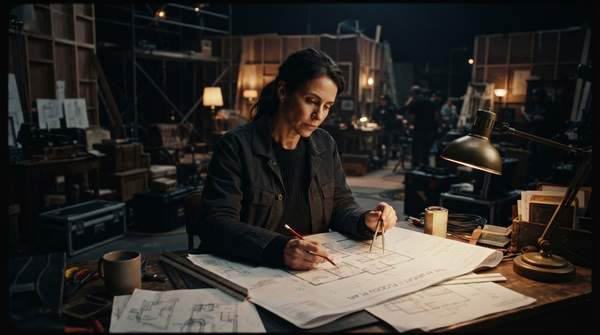
On a bustling film set, the gaffer is the one person responsible for turning a director of photography's (DP) abstract mood board into a tangible, safe, and powerful electrical reality. This critical role involves orchestrating complex lighting setups, managing extensive power supplies, and leading a dedicated electrical crew to achieve the desired visual aesthetic. The gaffer acts as the indispensable technical lead, transforming creative lighting concepts into a functional and visually impactful on-set reality.
A film's visual impact is profoundly shaped by its lighting, yet the gaffer, who directly implements this vision, remains largely unknown to the public. Despite their deep technical knowledge and leadership capabilities, their contributions often go unrecognized by audiences.
The gaffer's role is a prime example of how essential, highly skilled technical artistry often operates behind the scenes, making the magic happen without receiving direct audience credit. The gaffer critically determines whether an artistic vision can be safely and effectively realized on screen, positioning them as the true operational bottleneck for on-set aesthetics.
The Gaffer's Collaborative Vision and Strategic Planning
Before any cameras roll, the gaffer engages in significant pre-production planning. This includes reading the script to identify specific lighting requirements and meeting with both the director and the director of photography to align on the overall lighting vision, according to Masterclass. This early involvement ensures that the lighting plan is integrated seamlessly into the film's broader creative direction.
The gaffer's responsibilities extend to creating a comprehensive lighting plan that adheres to the production's budget, as detailed by Masterclass. This strategic financial oversight reveals a deeper involvement than simple execution. While Studiobinder suggests the gaffer 'works directly under the DP and executes his or her vision,' the detailed account from Masterclass regarding pre-production planning and budget creation indicates a more collaborative and leadership-heavy role. Based on Masterclass's detailed account of pre-production planning and budget creation, the gaffer is not merely an executor but a critical strategic partner whose early involvement can make or break the financial and logistical viability of a DP's most ambitious visual concepts.
Beyond planning, the gaffer also assembles the entire lighting crew. This includes hiring set lighting technicians, lamp operators, and the best boy electric, according to Masterclass. This critical task ensures that the right talent is in place to execute the intricate lighting designs, solidifying the gaffer's role in strategic team assembly.
On-Set Leadership and Dynamic Execution
During filming, the gaffer assumes direct command of the electrical department on set. They lead the electricians who install and operate lighting equipment, assigning specific tasks and maintaining an organized workflow, as reported by Tcwglobal. This hands-on leadership ensures that the lighting plan translates effectively into practical application.
The gaffer also makes crucial decisions regarding how lights will be powered and physically placed on set, leading the lighting crew through these installations and making real-time adjustments as filming conditions evolve, notes Tcwglobal. This adaptive approach is vital for maintaining the DP's vision amidst dynamic environmental or logistical challenges. The gaffer's continuous on-set adjustments and leadership of the entire electrical department, as highlighted by tcwglobal and Masterclass, confirms that their uncredited mastery is the true determinant of a film's visual consistency and safety, making them far more than an 'unsung hero' – they are the indispensable operational architect.
Throughout the shooting process, the gaffer continuously observes the lighting and makes fine-tuned adjustments to ensure that every shot achieves the desired aesthetic quality, according to Masterclass. This meticulous attention to detail and proactive problem-solving directly safeguards the visual integrity of the final product, solidifying their role in dynamic execution.
The gaffer functions as the ultimate guardian of both artistic integrity and on-set safety. They translate abstract visual concepts provided by the DP into tangible, secure electrical realities, managing complex power supplies and a wide array of equipment. This involves not only understanding the aesthetic goals but also ensuring that all lighting setups comply with rigorous safety standards, protecting the cast and crew from electrical hazards. Their expertise ensures that creative ambition does not compromise operational security.
Despite often being described as working 'under' the DP, the gaffer holds significant operational autonomy. They make crucial decisions regarding equipment selection, power distribution, crew deployment, and precise lighting placement. These choices directly influence the final visual output of the film. This autonomy confirms that while the DP sets the artistic direction, the gaffer's practical and managerial decisions are fundamental to the successful realization of that vision, establishing them as a critical decision-maker in the production workflow.
What is the difference between a gaffer and a DP?
The Director of Photography (DP) is responsible for the overall artistic and technical quality of the image, defining the film's visual style and aesthetic. In contrast, the gaffer is the chief lighting technician who translates the DP's creative vision into a practical, safe, and executable lighting plan on set. The gaffer manages the electrical department and all lighting equipment, ensuring the DP's vision is realized through technical implementation.
What skills does a gaffer need?
A gaffer requires a comprehensive understanding of electricity, lighting equipment, and rigging techniques. Strong leadership abilities are essential for managing the electrical crew, alongside excellent problem-solving skills to adapt to changing on-set conditions. Budget management and a keen eye for visual detail are also crucial for translating artistic concepts into effective lighting designs.
What does a gaffer do on a film set?
On a film set, a gaffer leads the electrical department, overseeing the setup, operation, and adjustment of all lighting equipment. This includes choosing power sources, placing lights, assigning tasks to the crew, and making real-time modifications to lighting setups to achieve the director of photography's desired look. They ensure the lighting is both aesthetically perfect and operationally safe for every shot.
As film production increasingly relies on complex visual effects and diverse shooting environments, the gaffer's role as a technical innovator and safety guarantor will likely expand, solidifying their indispensable position in cinematic creation.