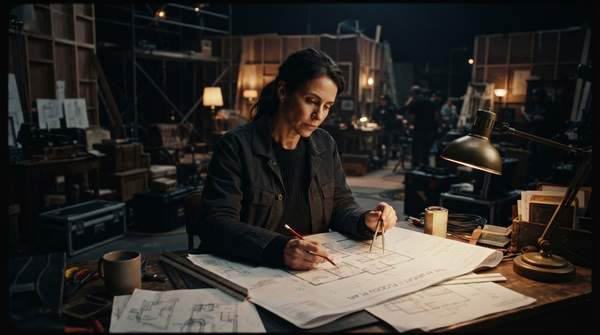
At a major film set, a Line Producer manages multi-million dollar budgets while ensuring, according to Studiobinder, all performers receive their first meal break within six hours of their first call. This granular attention, from financial oversight to labor compliance, defines the immense operational burden of this crucial role.
Creative aspirations in film are boundless, but resources are strictly finite. This fundamental tension defines daily production challenges.
Line Producers are not mere administrators; they are crucial strategic partners. Their expertise directly determines whether a project moves from concept to screen, making their role increasingly vital in complex productions.
The Unsung Architect of Production
A Line Producer manages a production's financial and logistical aspects, serving as its operational backbone. They translate a director's abstract vision into a concrete, executable plan. According to Screenskills, they hire crew, allocate funds, and ensure filming proceeds safely, creatively, on budget, and on time. This broad responsibility makes them the primary interface between artistic ambition and practical execution, aligning all elements for a successful shoot.
Mastering the Budget, Line-by-Line
Line Producers generate and continuously review the budget line-by-line, a critical task for maintaining financial solvency. This meticulous oversight ensures every dollar is strategically deployed to maximize production value within fiscal limits. They collaborate with department heads, as noted by Screenskills, to allocate funds, enabling the director's vision while delivering the best possible product. This approach allows creative flexibility within financial parameters, directly impacting the final product's quality.
Beyond the Numbers: Crew, Contracts, and Crisis Management
Line Producers manage all crew and contracts, handling hiring, deal oversight, and paperwork. This establishes them as the primary human resources and operations lead, ensuring a compliant, efficient workforce. During production, Line Producers track the budget and filming, address unexpected issues, and oversee the wrap, according to Screenskills. This constant adaptation keeps production on track, showcasing their critical problem-solving capabilities.