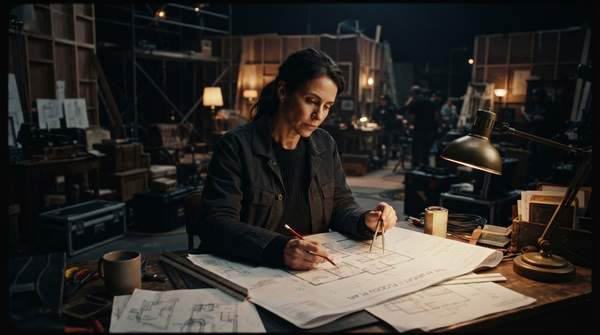
On an independent Irish feature, the producer's role stretches beyond traditional boundaries, working both above and below the line. They might find themselves ensuring toilets are stocked and taps function, all to keep the set together, reports The Irish Independent. Traditional film roles are highly specialized, a characteristic that contrasts sharply with the producer's expanded role. Independent production demands crew members, especially producers, embrace a vast array of responsibilities, blurring conventional lines.
Success in independent filmmaking thus hinges less on strict job descriptions and more on the adaptability and comprehensive oversight of key individuals. The producer, acting as the project’s logistical and emotional backbone, directly impacts morale. A poorly constructed schedule, for instance, can cripple the collaborative spirit, as The Irish Independent notes, making the producer's schedule the film's emotional engine.
1. Producer
The producer oversees the entire film process, from fundraising and budgeting to hiring and distribution. On low-budget films, this role expands to include financial structuring, deferred fees, and acting as both line producer and production manager. They even manage small practical details like ensuring functional toilets and taps. A hands-on approach directly impacts crew morale; a well-managed schedule prevents burnout and fosters collaboration, according to thereactionlab and The Irish Independent.
2. Director
The director translates the screenplay into a film, making key creative decisions on casting, set design, costume, and editing. While a DGA contract might stipulate a weekly salary of $23,76 for feature film directors, this figure often represents a baseline for a highly negotiated position, underscoring the significant financial investment in creative leadership, as noted by onassemble. For independent films, this salary is often deferred or reduced, reflecting the project's financial constraints.

3. Director of Photography (DP)
The Director of Photography (DP) crafts the film’s visual language, dictating camera angles, lighting, and composition. Their choices are not merely aesthetic; they fundamentally shape the narrative's emotional impact and audience perception, as outlined by thereactionlab.
4. Line Producer
The line producer manages day-to-day operations, scheduling, and on-set budgeting. In low-budget independent films, this critical role is often absorbed by the main producer, highlighting the necessity of a single individual overseeing both creative vision and practical execution, according to The Irish Independent.
5. Production Manager
The production manager handles logistics, crew hiring, equipment, and locations. Like the line producer, this function is frequently absorbed by the main producer in low-budget independent films, demonstrating how resourcefulness often dictates the consolidation of vital operational roles, as detailed by The Irish Independent.
The Producer's Evolving Role: From Oversight to Omnipresence
| Aspect | Traditional Film Producer | Independent Film Producer (2026) |
|---|---|---|
| Scope of Responsibility | Manages fundraising, budget, hiring staff, and oversees conception to distribution. | Manages development, including fundraising, budget, hiring, and distribution, often acting as line producer and production manager, according to thereactionlab and The Irish Independent. |
| Financial Management | Focuses on securing and allocating overall budget. | Helps with financial structure, deferred fees, and planning for low-budget films. Financial structure, deferred fees, and planning for low-budget films often involve navigating a tier system that categorizes productions into 'production cities' and 'non-production cities', directly impacting crew rates, notes onassemble. |
| Operational Involvement | Primarily above-the-line oversight. | Extends to below-the-line logistical and even menial tasks, such as ensuring toilets are stocked and taps work. |
| Crew Morale Impact | Indirect through overall project management. | Directly dictates morale through scheduling and logistical competence, serving as the "emotional engine" of the production. |
Independent producers transcend traditional roles, becoming the linchpin who blends 'above and below the line' responsibilities. Their direct involvement in day-to-day practicalities and navigation of complex financial structures, which directly impact crew compensation, sets them apart from traditional counterparts. Comprehensive oversight is critical for independent film success.
Cultivating an Efficient and Creative Indie Set
An efficient and creative set is paramount for independent film. The right energy directly improves performance and crew responsiveness, as The Irish Independent confirms. A producer's logistical and organizational efforts directly translate into tangible creative benefits, fostering a productive environment. Proactive management of resources and schedules ensures smoother workflow, enhancing both work quality and crew morale.
The Indispensable Adaptability of Indie Film Crews
The independent film sector demands adaptability. Crew members routinely transcend defined roles, a necessity for bringing projects to fruition under constrained budgets and tight schedules. Flexibility and resourcefulness, particularly from the producer, becomes a core competency, enabling multi-skilled teams to overcome financial and logistical hurdles and bring a vision to life.
By Q3 2026, independent production companies that prioritize comprehensive, hands-on management, exemplified by the producer's expansive role, will likely achieve higher creative success rates and maintain stronger crew cohesion. The model of independent production companies prioritizing comprehensive, hands-on management, seen in projects like the Irish feature Horseshoe, confirms the value of generalist oversight in a specialized field.
Frequently Asked Questions About Indie Film Roles
What is the difference between a director and a producer in independent film?
In independent film, a director primarily focuses on the artistic and creative execution of the screenplay, guiding performances and visual storytelling. The producer, however, manages the entire project from financing and logistics to distribution, often absorbing roles like line producer and production manager due to budget constraints, making their role significantly broader than in traditional productions.
How many people are typically on an indie film crew?
The size of an independent film crew can vary significantly based on budget and scope, ranging from a handful of dedicated individuals on micro-budget projects to several dozen for larger independent features. Unlike major studio productions which might employ hundreds, indie crews often rely on a core team with members taking on multiple responsibilities.
What are the main departments in film production?
Film production typically involves several key departments, including production (management, logistics), directing (creative vision), cinematography (visuals and camera), art department (set design, props), sound (recording, mixing), and post-production (editing, VFX, sound design). In independent filmmaking, individuals often span responsibilities across these departments, blurring traditional boundaries.