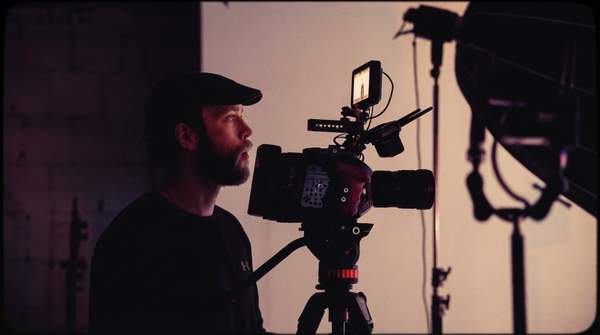
Reshoots on high-budget films can account for 5 to 20 percent of the final production cost, a financial burden that virtual production aims to mitigate by shifting creative decisions to pre-production. These unexpected costs can escalate budgets by millions, often stemming from issues discovered late in the traditional post-production pipeline. Studios frequently face difficult choices between extensive, costly reshoots and compromising the film's artistic vision, impacting both financial returns and creative integrity.
However, virtual production demands substantial upfront investment in cutting-edge hardware and meticulous digital pre-production. A significant capital outlay creates an initial barrier, contrasting sharply with its promise to drastically reduce the financial risks and creative compromises inherent in traditional post-production and reshoots.
Companies that strategically adopt virtual production will likely gain a significant competitive advantage in both cost-efficiency and creative output, potentially reshaping industry standards for high-budget visual storytelling. The modern filmmaking landscape in 2026 requires understanding the technical requirements of virtual production stages to ensure budget certainty and creative agility.
What is Virtual Production and How Does it Work?
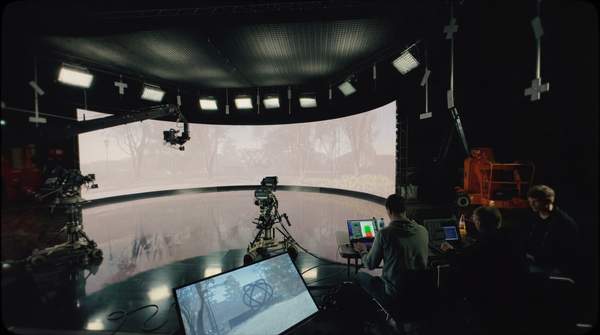
Virtual production integrates physical and digital elements in real time, allowing filmmakers to visualize and refine scenes on set. This process involves a camera tracking system that feeds positional data into a game engine, such as Unreal Engine, which then renders the 3D environment from the camera's perspective for display on LED walls, according to arctic7. This technology enables the dynamic blending of live-action footage with computer-generated backgrounds.
Directors and cinematographers can observe near-final shots in real time through this setup, enabling immediate adjustments to lighting, virtual environments, and camera angles. This real-time feedback loop transforms the director's role from a reactive problem-solver in post-production to a proactive decision-maker on set, empowering immediate artistic iteration. The virtual production workflow front-loads creative work, requiring meticulous pre-production to build digital worlds and plan shots before filming commences.
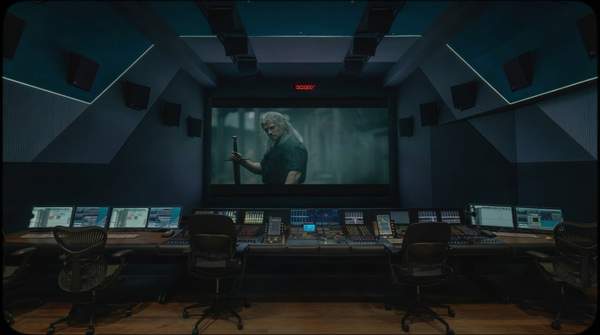
This method shifts where creative energy and budget are concentrated, moving from chaotic, unpredictable post-production to a controlled pre-production environment. The ability to make instant changes on set reduces the need for extensive post-production corrections, directly addressing the high costs associated with traditional filmmaking's later stages.
The Technical Backbone: Hardware Requirements for Virtual Stages
Establishing a virtual production stage requires significant investment in specialized hardware to handle the demanding real-time rendering processes. For central processing units, AMD's Threadripper™ PRO 9000WX series currently provide the fastest performance for Unreal Engine operations, according to Pugetsystems. These high-core-count processors are essential for managing complex digital environments and intricate simulations.
Graphics processing units are equally critical, with the NVIDIA RTX PRO™ 6000 Blackwell and GeForce RTX™ 5090 identified as the fastest GPUs for virtual production. The video RAM (VRAM) requirements vary significantly based on the stage's complexity; most motion capture or green screen workstations require 10-14GB of VRAM. However, large LED volumes, which render expansive digital backgrounds, demand a much higher capacity, typically between 24-48GB of VRAM.
The range of hardware specifications indicates that virtual production is not a minor technological upgrade but a fundamental infrastructure overhaul, positioning early adopters with the capital to invest as the new industry leaders while others struggle with legacy costs. Initial setup costs, such as the 24-48GB VRAM for large LED volumes detailed by Pugetsystems, are not just substantial but represent a significant barrier to entry, limiting its immediate widespread adoption to well-funded productions.
The substantial hardware requirements for virtual production stages present a strategic dilemma for studios. While the initial capital expenditure for components like high-VRAM GPUs and powerful CPUs is considerable, the long-term financial benefits offer a compelling counterpoint. A high upfront investment creates a barrier, limiting immediate widespread adoption to well-funded productions capable of absorbing these costs.
However, studios that fail to embrace virtual production are effectively choosing to retain up to 40% of their film budgets as unpredictable, high-risk expenditures, a gamble that will become increasingly untenable. This includes the combined financial burden of traditional reshoots and extensive post-production VFX. The shift from traditional post-production's iterative, often delayed, problem-solving to virtual production's real-time, on-set finalization means that creative errors are caught and corrected when they are cheapest to fix, rather than becoming exponentially more expensive problems later.
The most expensive and creatively demanding phase of filmmaking effectively shifts from the chaotic, unpredictable post-production stage to the meticulous, controlled environment of pre-production. This redefines where a film's budget and creative energy are concentrated, transforming project management and creative iteration. For example, a minor lighting adjustment on set during virtual production costs significantly less than a complex VFX correction in post-production months later.
The Economic and Creative Impact: Why Virtual Production Matters
The economic justification for virtual production becomes clear when examining the costs associated with traditional filmmaking. Reshoots on high-budget films can account for 5 to 20 percent, and sometimes more, of the final production cost, according to Deloitte. Additionally, visual effects (VFX) expenses on a high-budget sci-fi or fantasy film can reach as high as 20 percent of the total film budget.
Traditional filmmaking carries a significant, often hidden, financial sinkhole, as revealed by these figures. Virtual production aims to mitigate these risks by enhancing production planning, increasing shooting efficiency, and critically, reducing the number of expensive reshoots, as Deloitte highlights. By doing so, it shifts the financial burden from unpredictable, high-cost post-production corrections to a more manageable, upfront technological investment.
The combined financial burden of traditional reshoots (5-20% of budget) and VFX costs (up to 20%) reveals that virtual production is a critical strategy for mitigating a massive financial sinkhole in traditional filmmaking. Furthermore, arctic7's description of real-time feedback loops and immediate adjustments reveals that virtual production isn't just about saving money; it's about restoring creative agility and control to the set, empowering directors to finalize their vision in the moment rather than in a costly, delayed post-production cycle.
How does virtual production differ from traditional filmmaking?
Virtual production fundamentally shifts the most expensive and creatively demanding phase of filmmaking from the chaotic, unpredictable post-production stage to the meticulous, controlled environment of pre-production. Unlike traditional methods where visual effects are added later, virtual production allows directors to see near-final shots in real-time on set, enabling immediate creative adjustments. This process reduces the reliance on costly reshoots and extensive post-production corrections.
What are the benefits of using virtual production stages in 2026?
Using virtual production stages in 2026 offers significant benefits in cost-efficiency and creative control. By front-loading creative decisions and enabling real-time feedback, studios can drastically reduce the financial risks associated with unpredictable reshoots and extensive visual effects post-production. This approach provides budget certainty and empowers directors to finalize their vision on set, leading to more agile and efficient productions.
What is the typical cost range for virtual production LED walls?
The cost for virtual production LED walls can vary significantly based on size and resolution, ranging from $150,000 to $1,500,000 for a medium-sized stage, according to Royal Display. This substantial upfront investment covers the high-density LED panels, processing units, and calibration required for seamless integration with real-time rendering engines. Larger, higher-resolution setups for major productions can exceed this range considerably.
Virtual production fundamentally shifts filmmaking's financial risk from unpredictable, costly reshoots and post-production to a high, but controllable, upfront technological investment. This makes it the only viable path for studios seeking budget certainty and creative agility in modern filmmaking. The substantial initial capital required for advanced virtual production stages, particularly for high-VRAM GPUs and extensive LED volumes, establishes a significant barrier.ier to entry, yet promises long-term returns by mitigating traditional filmmaking's financial uncertainties.
Studios that strategically invest in these technical requirements are positioning themselves as leaders, capable of achieving greater creative control and efficiency. The ability to make real-time creative decisions on set, rather than in delayed post-production, streamlines the entire filmmaking process. This approach ensures that creative errors are addressed when they are least expensive, rather than becoming exponentially costlier problems later in the production cycle.
By Q3 2026, major studios like Industrial Light & Magic, which have already heavily invested in virtual production infrastructure, will likely demonstrate further efficiencies and creative benchmarks in their projects. This continued adoption will solidify virtual production as the standard for high-budget visual storytelling, pushing traditional workflows towards obsolescence due to their inherent financial unpredictability.