
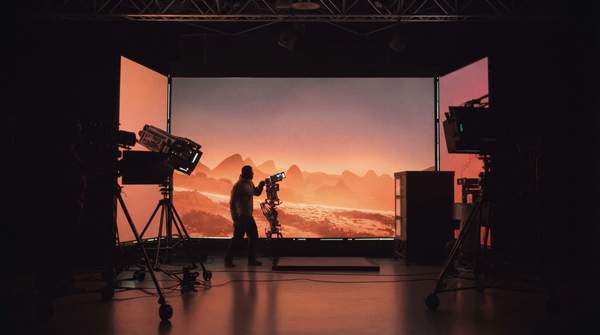
In 2020, the production of "The Mandalorian" showcased a 20-foot tall and 75-foot wide LED wall, creating a 270-degree virtual environment, according to Avixa. This immersive display allowed actors to perform against dynamic, lifelike digital backdrops in real time, significantly altering on-set interactions and visual effects workflows, according to Avixa. This approach shifted critical creative decisions onto the production floor, rather than deferring them to post-production.
Filmmaking traditionally relies on extensive physical sets and location shoots, often supplemented by green screen technology for visual effects. However, virtual production with LED walls is rapidly replacing these methods with dynamic, real-time digital environments, changing how films are made. This shift integrates visual effects directly into the principal photography stage.
Based on the proven benefits in cost, time, and creative control, virtual production with LED walls appears likely to become the dominant method for high-end visual content creation. This technological advancement pushes traditional filmmaking methods into more niche applications, particularly for projects requiring extensive digital integration.
Beyond Green Screens: What Are LED Volumes?
Actors in current virtual production perform against an LED wall that displays a virtual environment, generated and manipulated in real-time, according to amt-lab. This system provides immediate visual feedback and interaction, differentiating it from traditional green or blue screen methods. LED volume technology, such as ILM StageCraft, permits filmmakers, actors, and crew to shoot against a visible, lifelike image in motion, enabling more naturalistic acting compared to blue-screen environments, Avixa reports. The real-time, visible environment is key to unlocking more natural performances and immediate creative feedback on set, fundamentally changing the actor's experience. This shift to visible, real-time digital environments demands a new breed of director and actor, who must leverage immediate interaction with virtual worlds rather than relying on abstract imagination or delayed post-production fixes.
The Creative Revolution: Real-Time Interaction and AI
Real-time virtual production allows dynamic interaction with digital environments during filming, enhancing creativity and flexibility on set, as reported by Blog Chaos. This capability enables directors to adjust digital backdrops, lighting, and camera perspectives on the fly, tailoring the scene to immediate creative needs. Furthermore, AI plays an essential role in virtual film production by assisting in the creation of realistic and immersive digital environments, according to amt-lab. The combination of dynamic interaction and AI-driven environments provides filmmakers with unprecedented creative control and realism, pushing the boundaries of visual storytelling. This integration allows for immediate visualization of complex scenes, reducing the guesswork inherent in traditional green screen workflows and empowering creative teams to make more informed decisions during principal photography.
Efficiency and Sustainability: The Economic Edge
Virtual production offers significant cost and time savings by avoiding the expense of location shoots and allowing for quicker turnaround times, according to amt-lab. This efficiency stems from centralizing production on a soundstage, eliminating travel logistics, permits, and weather-related delays. Virtual production also offers benefits like reduced environmental impact compared to traditional filmmaking methods, according to Blog Chaos. These combined efficiencies make high-quality visual production more accessible and sustainable, fundamentally reshaping the economics of filmmaking.
While virtual production promises democratization through cost and time savings, as noted by amt-lab and Blog Chaos, the significant scale of pioneering setups like The Mandalorian's, detailed by Avixa, indicates a considerable capital investment. This suggests that the highest tier of this technology still represents a substantial barrier, potentially creating a new divide in production capabilities despite its long-term efficiencies.
Reshaping the Set: From Physical to Virtual
Virtual production enables filmmakers to replace traditional physical sets and locations with virtual ones, which can be designed and modified in a much more flexible and cost-effective manner, according to amt-lab. This capability means a single LED volume can simulate diverse environments, from alien planets to historical cityscapes, without the need for extensive construction or travel. This shift from physical to virtual sets offers unparalleled adaptability and economic advantages for filmmakers, allowing for rapid iteration and creative freedom.
Companies that continue to prioritize traditional physical sets and extensive post-production VFX are not just incurring higher costs. They are actively sacrificing the real-time creative agility and enhanced on-set performance that virtual production offers, as evidenced by amt-lab and Avixa. The ability to visualize and adjust environments instantly on set provides a significant competitive edge in modern content creation.
Common Questions About Virtual Production
What are the primary challenges for adopting virtual production LED walls?
Adopting virtual production LED walls primarily faces challenges related to initial capital investment and the need for specialized technical expertise. The high cost of acquiring and installing large-scale LED volumes can be prohibitive for smaller studios. Additionally, productions require skilled technicians proficient in game engine software, real-time graphics, and LED wall operation, which represents a new demand for talent in the industry.
How does virtual production impact filmmaking roles?
Virtual production impacts several filmmaking roles by requiring new skill sets and fostering greater collaboration. Directors and cinematographers must adapt to real-time environment manipulation and immediate visual feedback. Visual effects artists are integrated earlier into the pre-production and on-set phases. This shifts their focus from post-production fixes to real-time asset creation and scene optimization.
What advancements are expected in virtual production LED walls by 2026?
By 2026, advancements in virtual production LED walls are expected to include higher pixel density and improved color accuracy, leading to even more photorealistic environments. Integration with advanced AI for dynamic content generation and automated lighting adjustments will likely become standard. Furthermore, more modular and easily deployable LED wall solutions are anticipated, reducing setup times and broadening accessibility for diverse productions.
The Future is Virtual: A New Era of Filmmaking
The continued evolution of virtual production technology, particularly LED volumes, suggests a future where the line between physical and digital environments blurs further. By 2026, major studios like Industrial Light & Magic will likely expand their StageCraft volumes, making this technology even more accessible and integral to high-budget productions. This progression confirms a sustained industry commitment to real-time, on-set visual effects integration.


