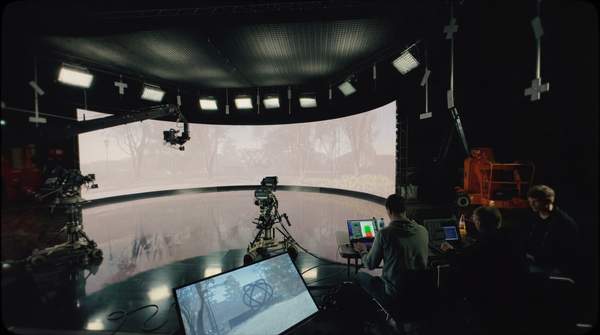
The film and television industry's significant ecological footprint, driven by energy-intensive processes, large-scale construction, and extensive travel, necessitates effective modern production techniques. This guide provides a ranked list for producers, department heads, and filmmakers seeking practical, impactful, and eco-friendly approaches from pre-production through post-production. Practices are evaluated based on their potential for environmental impact reduction, accessibility across different budget levels, and evidence of successful real-world adoption.
1. Energy-Efficient Lighting & Power — Highest Direct Impact on Carbon Footprint
LED (Light-Emitting Diode) fixtures consume up to 75% less energy than traditional tungsten or HMI (Hydrargyrum medium-arc iodide) lights, making the transition to modern lighting the single most impactful change for Directors of Photography, gaffers, and line producers to reduce a production's carbon footprint. This drastic reduction in electricity demand from generators or the grid not only cuts emissions but also reduces heat output, creating a safer, more comfortable set environment.

Lighting and power directly impact greenhouse gas emissions, with major productions like Wicked integrating LED technologies to minimize environmental toll. While professional-grade LED fixtures require higher initial capital investment than traditional kits, this cost is often offset by lower energy bills and reduced need for fuel-consuming generators over the production's duration. Renting LED packages offers a financially viable alternative for tighter budgets, providing full environmental benefits.
2. Sustainable Set Design & Waste Management — Greatest Reduction in Physical Waste
Addressing the immense physical waste from set construction and disposal, advanced waste management for production designers, art directors, and construction coordinators replaces the traditional 'build-and-landfill' model with a circular approach. A report by the International Experts for Research Enrichment and Knowledge Exchange (IEREK) highlights the prioritization of modular set components, reconfigurable and reusable across productions. Materials are increasingly sourced from certified sustainable suppliers (like FSC-certified lumber) or salvaged from deconstruction yards.
Diverting tons of physical material from landfills, this approach tackles systemic, industrial-scale waste by planning for deconstruction from the design phase. Crews use screws and bolts instead of nails and adhesives for clean disassembly, allowing post-shoot materials to be donated to local theaters, schools, or organizations like Habitat for Humanity. Logistical complexity is the main limitation, requiring meticulous planning, storage for reusable assets, and established relationships with local recycling and donation centers, which can be challenging on tight schedules or in remote locations.
3. Digital Workflows & Paperless Pre-Production — Best for Accessibility and Low-Cost Entry
The film industry's historical reliance on paper for scripts, call sheets, schedules, storyboards, and legal documents can be almost entirely eliminated by transitioning to a fully digital workflow. This low-cost sustainability win is ideal for production managers, coordinators, and assistant directors. Cloud-based platforms like Scriptation for script distribution, Scenechronize for digital call sheets, and Trello or Asana for collaborative planning are now industry standard, streamlining communication and enabling real-time updates without constant reprinting and distribution.
With near-zero cost of entry and universal applicability from student films to blockbuster features, digital workflows offer significant advantages. The short film small selkie, noted by the MetFilm School, successfully implemented an opt-in policy for paper printouts, demonstrating feasibility on smaller scales. Reliance on technology and digital literacy is the most significant drawback; a dead battery or poor connectivity can disrupt information flow. A production-wide commitment to the digital system is crucial, as a single department reverting to paper can break the chain.
4. Circular Economy for Wardrobe & Props — Best for Extending Material Lifespan
Targeted at costume designers, prop masters, and set decorators, this practice reimagines the lifecycle of the physical items that bring a film's world to life. A circular approach prioritizes renting, borrowing, or purchasing second-hand over creating new items. For custom-built pieces, designers use sustainable or recycled materials. The most crucial step, as highlighted by IEREK, occurs after production wraps. Instead of being discarded or stored indefinitely, costumes and props are sold, donated to other productions or theaters, or repurposed. This extends their useful life far beyond a single project, reducing the demand for new manufacturing and preventing usable goods from ending up in landfills.
Combating the 'buy-and-toss' culture in fast-paced production, this method addresses material volume, though often smaller than set design. The primary limitation is time and creativity; sourcing vintage or second-hand items can be more time-consuming than buying new. For highly specific or futuristic designs, creating items from scratch may be unavoidable, but using recycled materials remains a viable sustainable option.
5. Eco-Conscious Catering & Craft Services — Most Visible Daily Practice for Crew Engagement
Sustainable catering, essential for production coordinators and caterers, directly impacts the entire cast and crew daily by focusing on three core areas: eliminating single-use plastics, reducing food waste, and sourcing local, seasonal, and plant-based options. Replacing disposable plastic water bottles with reusable canteens and large water coolers can prevent thousands of bottles from entering the waste stream on a single feature film. Offering clearly labeled vegetarian and vegan options, as practiced on the set of small selkie, reduces the production's carbon footprint since plant-based foods generally require less land and water and produce fewer emissions than meat.
Eco-conscious catering, while engaging the entire crew in visible, communal sustainability efforts, presents significant cost and logistical challenges. Sourcing from local, organic farms may be more expensive than large-scale food suppliers. Furthermore, in less-populated filming locations, access to such suppliers or composting facilities for food scraps can be limited, necessitating creative solutions or advance planning. Despite these hurdles, it serves as a daily reminder of the production's green commitments.
6. Green Transportation & Location Management — Best for Reducing Travel-Related Emissions
Green transportation strategies are critical for location managers, transportation captains, and producers, directly targeting significant emissions from moving cast, crew, and equipment. These multi-faceted approaches include prioritizing local hiring to reduce flights, arranging crew carpools or shuttle buses over individual cars, and utilizing hybrid or electric vehicles in the production fleet. For unavoidable air travel, productions can invest in high-quality carbon offsets. As noted in Señal News, Iceland's compact production environment and renewable energy access offer structural advantages for greener productions, underscoring location choice as a key strategy component.
This practice is vital for productions with multiple locations or those filming far from major production hubs. Its main drawback is its heavy dependence on external infrastructure. The availability of electric vehicle charging stations, robust public transportation, or a deep pool of local talent can vary dramatically by region. In remote locations, the options for sustainable transport may be severely limited, making it one of the more challenging practices to implement comprehensively.
7. Sustainable Storytelling — Greatest Potential for Long-Term Cultural Impact
Best for writers, directors, and producers, this practice moves beyond on-set operations to embed sustainability into the narrative itself. This isn't about making every film an environmental documentary. Instead, it involves integrating environmental themes and responsible behaviors organically into the story. This can be achieved through character choices (a protagonist who recycles or cycles to work), world-building (a sci-fi city powered by renewable energy), or social context that reflects real-world environmental challenges. The production company Glassriver, for example, views "green production and green storytelling" as two sides of the same coin in their commitment to responsible filmmaking.
Sustainable storytelling is ranked last not because it is least important, but because its impact is less direct and harder to quantify than physical waste or energy reduction. However, its potential for influencing audience perspectives is immense. The primary limitation is the risk of being heavy-handed or "preachy," which can alienate viewers. The key takeaway here is that for this practice to be effective, the sustainable elements must serve the story and characters authentically, rather than feeling like a lecture imposed upon the narrative.
=>| Practice | Category/Type | Key Metric | Best For |
|---|---|---|---|
| Energy-Efficient Lighting & Power | Energy Consumption | Kilowatt-hours (kWh) saved | DPs, Gaffers, Line Producers |
| Sustainable Set Design & Waste Management | Physical Waste | Tons of waste diverted from landfill | Production Designers, Art Directors |
| Digital Workflows & Paperless Pre-Production | Resource Conservation | Reams of paper saved | Production Managers, Coordinators |
| Circular Economy for Wardrobe & Props | Material Lifecycle | Percentage of items rented or reused | Costume Designers, Prop Masters |
| Eco-Conscious Catering & Craft Services | Daily Operations | Number of plastic bottles eliminated | Production Coordinators, Caterers |
| Green Transportation & Location Management | Emissions | Carbon footprint (tCO2e) from travel | Location Managers, Producers |
| Sustainable Storytelling | Narrative & Theme | Audience awareness and influence | Writers, Directors, Producers |
How We Chose This List
The items on this list were selected and ranked to provide a comprehensive overview of the most effective sustainable production practices available today. Our primary criteria were tangible environmental impact, focusing on practices that deliver measurable reductions in carbon emissions, physical waste, and resource consumption. We also heavily weighed accessibility and feasibility, ensuring the inclusion of strategies that can be adopted by productions of all sizes and budgets, from independent shorts to major studio features. Finally, we prioritized practices with evidence of successful real-world implementation, drawing on examples from specific film productions and industry reports. Practices that are still highly experimental or require niche, inaccessible technology were excluded in favor of proven, actionable solutions that filmmakers can implement now.
The Bottom Line
Adopting sustainable filmmaking practices is no longer a niche consideration but a growing industry standard. For large-scale productions looking for the biggest impact, transitioning to Energy-Efficient Lighting & Power offers the most significant reduction in carbon emissions. For independent and low-budget filmmakers, implementing Digital Workflows & Paperless Pre-Production is the most accessible and cost-effective first step toward a greener set.