Film Festival Circuit Strategies for Indie Filmmakers

Filmmakers can save themselves a $100 submission fee if a festival does not respond to their inquiry, a significant sum that nearly doubles the average submission cost.

JM
Julian Mercer

April 24, 2026 · 5 min read

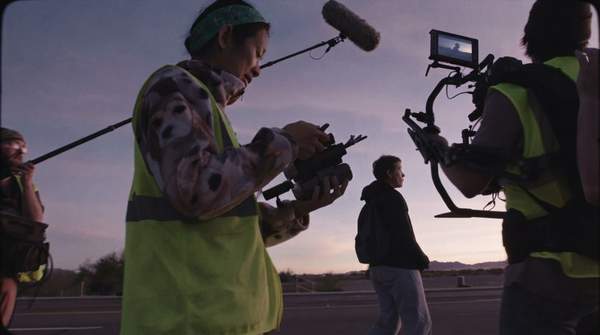
Indie filmmaker navigating a complex, abstract representation of the film festival circuit with numerous submission portals and fee structures.

Filmmakers can save themselves a $100 submission fee if a festival does not respond to their inquiry, a significant sum that nearly doubles the average submission cost. A $100 submission fee saving, highlighted by Noamkroll, reveals a substantial hidden financial risk for independent creators navigating the intricate film festival circuit without prior engagement. The cinematic dream often collides with fiscal realities, where every unacknowledged submission represents a tangible loss.

But filmmakers face a bewildering array of expensive submission options, making the path to festival recognition complex and costly. The average film festival presented 37.5 different fee options, with 10.6% of festivals offering more than 100 submission fee combinations, according to Stephenfollows. This sheer volume and variability of submission fees transform the festival circuit into a financial minefield, where blind submissions are almost guaranteed to be inefficient and costly without a clear strategy.

A proactive engagement strategy can drastically cut these costs and improve outcomes, shifting the power dynamic from festivals to creators. Indie filmmakers who master pre-submission outreach and smart fee management will likely gain a significant competitive and financial advantage in the festival circuit. With average submission fees for short films ranging between $30 and $55, as reported by Stephenfollows, understanding these structures becomes a critical component of sustainable filmmaking.

The Strategic Approach: Gauge Interest, Then Submit

Best for: Filmmakers seeking to minimize financial risk and maximize engagement before submission.

Before committing funds, filmmakers should initiate direct contact with festivals, aiming to gauge interest in their project. Pre-submission outreach can prevent a $100 loss if the festival ultimately does not respond to the inquiry, a significant saving identified by Noamkroll. While not every inquiry yields a positive result, approximately 30% of filmmakers do receive a response, creating an opportunity for a more informed decision.

Strengths: Offers substantial cost savings by preventing wasteful submissions; provides early validation of potential festival interest. | Limitations: Requires dedicated time for research and communication; not all festivals respond to inquiries. | Price: Can save filmmakers $100 per submission that would otherwise go unacknowledged.

Best for: Filmmakers with completed projects and structured planning capabilities.

Strategic timing is crucial for budget management. Utilizing early bird submission periods offers significantly cheaper rates compared to regular or late submissions, a straightforward financial benefit highlighted by LA Film School. This approach necessitates completing the film and planning submissions well in advance, but the direct reduction in fees offers a tangible return on foresight.

Strengths: Provides immediate and direct cost reduction; encourages disciplined project completion and planning. | Limitations: Demands an earlier final cut of the film; may limit adaptability for last-minute edits or festival changes. | Price: Offers direct cost reduction, potentially saving up to half the standard submission fee.

Best for: Filmmakers aiming for focused, high-impact festival engagement.

Instead of a broad, unfocused approach, filmmakers benefit from curating a precise list of 25-50 festivals for submission, a method advocated by Noamkroll. This focused strategy helps to navigate the over 12,000 available festivals, ensuring that efforts are directed toward platforms most likely to resonate with the film's genre, theme, and target audience. This meticulous selection process avoids overwhelming the filmmaker and optimizes resource allocation.

Strengths: Concentrates resources on the most relevant festivals; reduces the likelihood of financially wasteful, unsuitable submissions. | Limitations: Requires comprehensive research and understanding of individual festival profiles. | Price: Indirectly saves money by preventing expenditure on submissions to inappropriate or low-probability festivals.

Best for: Filmmakers who have initiated pre-submission outreach and received a response.

Following an initial inquiry, filmmakers should proceed with a submission to a festival if they receive a response, even in the absence of a waiver code, as advised by Noamkroll. A festival's response, regardless of its content, signals a level of engagement or interest that transforms the submission from a blind gamble into a more calculated investment. Proceeding with a submission after receiving a response ensures that the effort of pre-submission outreach is effectively leveraged.

Strengths: Validates potential festival interest before the full financial commitment; optimizes the follow-through on initial communication. | Limitations: Still requires the payment of the submission fee; a response does not guarantee acceptance into the festival. | Price: Prevents entirely wasteful submissions to festivals that show no prior engagement.

Optimizing Your Budget: Understanding Fee Structures

Submission PeriodCost ImplicationStrategic Benefit
Early BirdSignificantly lower feesMaximizes budget, rewards early planning
RegularStandard feesOffers flexibility, but at a higher cost
LateHighest feesAccommodates delays, but at a premium

The Bottom Line: Smart Strategy Wins

Embracing a strategic, pre-submission outreach model is no longer optional for indie filmmakers aiming for festival success and financial prudence. The sheer complexity of festival submission fees, with an average of 37.5 options and over 100 for some, means filmmakers are navigating a financial minefield where blind submissions are almost guaranteed to be inefficient and costly. Based on Stephenfollows' data showing an average of 37.5 fee options per festival, filmmakers who fail to adopt a strategic pre-submission outreach approach are not just paying submission fees, but are actively subsidizing an inefficient and bewildering system. The opaque structure of festival submission fees demands a proactive counter-strategy.

The traditional 'spray and pray' submission method is financially unsustainable, as the potential for saving $100 per unresponded inquiry dwarfs the average $30-$55 submission fee, indicating that the cost of not doing outreach is far greater than the cost of a single submission. The $100 saving identified by Noamkroll for unresponded inquiries suggests that for every two or three blind submissions, filmmakers are effectively throwing away the cost of an entire festival entry, making strategic outreach a critical cost-saving measure. The $100 saving identified by Noamkroll for unresponded inquiries reframes the value of engagement not just as an advantage, but as a financial imperative.

Companies and organizations supporting indie filmmakers should prioritize education on strategic pre-submission outreach, as the evidence from Noamkroll and Stephenfollows collectively indicates that current submission practices are leading to significant, avoidable financial waste for creators. By 2025, indie filmmakers who prioritize proactive engagement and understand fee structures are positioned to achieve greater financial efficiency and festival visibility, potentially saving hundreds or even thousands of dollars in submission fees annually through informed decision-making.