In 2025, U.S. courts issued the first substantive, merits-stage decisions addressing whether the use of copyrighted works in AI training constitutes infringement, marking a pivotal moment in the legal battle over artificial intelligence. These initial rulings began to define the boundaries of digital appropriation, impacting both AI developers and content creators. The outcomes are shaping the financial future for artists and writers whose work fuels generative models, influencing how intellectual property rights for AI generated content are managed.
Generative AI can create vast amounts of content by learning from existing works, but the legal system is still grappling with fundamental questions of authorship and ownership for these outputs and their training data. This ongoing tension creates significant uncertainty for all parties involved.
The coming years will see a significant redefinition of intellectual property rights, likely leading to new legislation or landmark court rulings that will either empower or restrict AI's creative potential. This redefinition is critical for maintaining a viable creative economy.
The U.S. Copyright Office published a notice of inquiry in the Federal Register in August 2023 (now outdated), initiating a coordinated regulatory effort alongside judicial action. This blend of court decisions and regulatory inquiries defines the future of intellectual property in the age of AI, according to Reuters. Two critical policy questions will determine generative AI's impact on the knowledge economy and creative sector, as noted by Academic Oup. The legal uncertainty surrounding copyright and patent principles for AI-generated outputs, especially those with minimal human involvement, remains a core challenge, according to Global Laws Governing Intellectual Property Rights for AI. This uncertainty leaves the creative economy in a precarious state, awaiting clear legal direction.
Authorship and Training Data: A Dual Legal Bind
The U.S. Copyright Office released Part 1 of its Report on Copyright and Artificial Intelligence on July 31, 2024, clarifying the legal status of content used to train AI models. Part 2, addressing the copyrightability of generative AI outputs, followed on January 29, 2025 (now outdated), according to copyright. These reports represent a foundational effort to map AI's legal landscape, yet they underscore a core conflict.
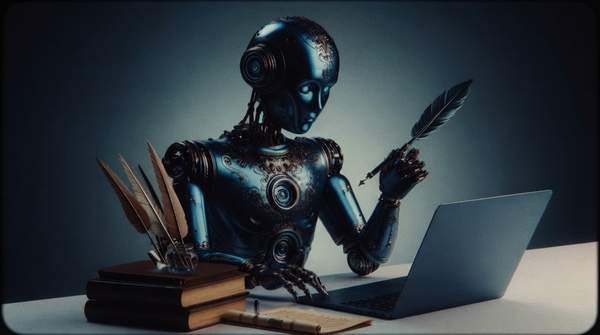
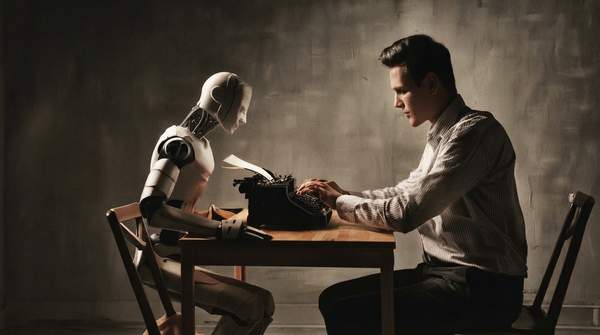
Most copyright laws demand human involvement, meaning fully AI-generated outputs often lack copyright protection due to the absence of a human author, as detailed by Global Laws Governing Intellectual Property Rights for AI This creates a significant hurdle for AI developers seeking exclusive rights for their creations. Simultaneously, copyright owners have filed several dozen lawsuits, alleging that creating digital copies without permission to train AI systems infringes on copyright, according to congress. The legal system grapples with both AI's potential authorship and whether its 'learning' process constitutes theft. This dual challenge forces regulatory bodies to dissect complex questions of intellectual property.
This human authorship requirement creates a counterintuitive outcome: the most advanced, autonomous AI creations might be legally unprotected. Conversely, AI outputs with significant human guidance could still qualify for copyright. This situation could discourage innovation in fully autonomous AI systems or encourage human 'ghost-authorship' to meet legal standards, creating a legal void for truly sophisticated AI works.
Major Lawsuits Defining the Landscape
Sony Music Publishing, Warner Chappell, and other music publishers sued Anthropic and co-founders Dario Amodei and Benjamin Mann, aggressively protecting musical works. The publishers accuse Anthropic of using thousands of copyrighted works to train its AI model Claude, according to TechCrunch. This allegation reveals the massive scale of content consumption by AI systems, underscoring the potential for widespread infringement.
Lawsuits like Alcon Entertainment, LLC v. Tesla, Inc. and Toronto Star Newspapers Ltd. v. OpenAI, Inc. actively test the limits of current intellectual property laws concerning generative AI, according to cablj. These cases span various media types, from film to news content. Such numerous and high-profile lawsuits confirm that content creators are actively using existing legal avenues to challenge AI's use of their intellectual property, establishing critical precedents rather than waiting for new legislation.
Unquantified Liability and Creator Vulnerability
The 'several dozen lawsuits' filed by copyright owners, reported by congress, and the 'thousands of copyrighted works' Anthropic is accused of using, according to TechCrunch, indicate AI developers are building models on potentially infringing content. This practice creates immense, unquantified legal liability that could cripple future AI innovation. The scale of alleged infringement suggests a systemic risk for the AI industry.
The U.S. Copyright Office's staggered reports in 2024 and 2025, coupled with the first substantive court decisions in 2025, according to copyright and Reuters, reveal a legal system struggling to keep pace. This reactive stance leaves the creative economy without clear rules, making human creators vulnerable to digital appropriation. The slow legal response forces a re-evaluation of what constitutes 'authorship' in the digital age, as advanced AI creations face uncertain legal protection. For more, see our content rights: copyright without human.
Who owns the copyright of AI-generated content?
Generally, copyright ownership for AI-generated content defaults to the human who provided the significant creative input or directed the AI's output, not the AI itself. The U.S. Copyright Office has clarified that for a work to be copyrightable, it must be the product of human authorship, denying registration for works created solely by AI algorithms without human intervention.
Can AI-generated content be patented?
Similar to copyright, patent law traditionally requires a human inventor. While AI can assist in the invention process, current U.S. patent law requires that a natural person be named as the inventor. The U.S. Patent and Trademark Office has issued guidance affirming that AI cannot be listed as an inventor on a patent application.
How to protect AI-created intellectual property?
Protecting intellectual property created with AI often involves establishing clear human authorship through documentation of creative input and oversight. For training data, creators can explore licensing agreements or utilize technological measures, while legal challenges, such as the several dozen lawsuits filed by copyright owners, aim to define fair use boundaries.
By Q3 2026, major AI developers like Anthropic or OpenAI faced significant financial penalties or revised operational mandates, fundamentally reshaping content acquisition strategies across the industry.