A cemetery gate is an invitation to imagine what lies beyond it. An iron arch might suggest an abandoned garden, a forgotten estate, or a place where the local ghosts have excellent taste in architecture. Before a single pencil touches the page, the picture has already established a mood.
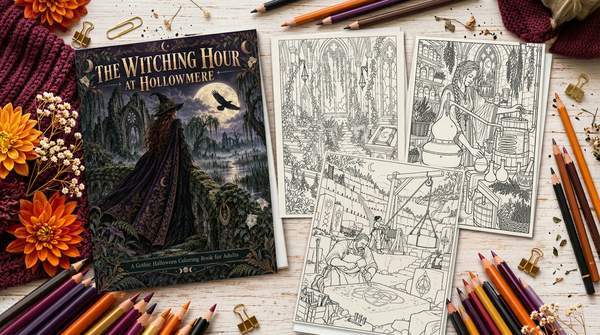
That atmospheric pull is part of what makes gothic coloring books so appealing. JoeandCoSupplyStore offers collections built around cemetery scenes, witches, Halloween pinups, and other darkly decorative subjects. Rather than treating every spooky design as interchangeable, this Etsy shop gives colorists several visual worlds to choose from.
Beyond the Usual Halloween Decorations
Pumpkins and cartoon ghosts have their charms, but gothic artwork can invite a different kind of attention. Ornate gates, candlelit imagery, ravens, and detailed figures carry shapes and textures that reward a closer look. The appeal comes partly from the subject and partly from deciding how it should feel once color enters the picture.
Dark imagery does not require a monochrome palette. A cemetery scene can lean toward silvery moonlight, mossy greens, or an autumn combination of copper and rust.
That freedom makes the subject matter useful well beyond October. Someone who enjoys gothic illustrations in books, art, fashion, or decor may be drawn to them in spring as readily as on Halloween. A spooky theme can be an enduring artistic preference instead of a seasonal assignment.
A Cemetery Gate Sets the Scene
The Cemetery Gates is advertised as a 40-page printable adult coloring book with cemetery imagery and ornate gates. Its listing previews show black-and-white scenes that include cemetery details and an angel near elaborate ironwork. The setting is the attraction: a gateway and its surroundings suggest a whole place, even when the page offers no written story.
An illustration with stonework and decorative ironwork can be colored in several distinct ways. Soft grays and muted greens may emphasize age and quiet; deep blues and warm amber accents can make an otherwise still scene feel theatrical. The lines provide the subject, while the coloring choices determine where the eye lands first.