Film and Pen
Film & TVContent CreationProductionBooksAdvertising
Film and Pen

Where creativity meets industry: film, TV, books, and media.

Film & TVContent CreationProductionBooksAdvertisingCreators
WritersContactPrivacyTerms
Film IndustryIndependent FilmFilmmakingAiTechnologyArtificial IntelligenceFilmmakingContent Creation

© 2026 Film and Pen. All rights reserved.

  1. Home
  2. /Books
  3. /AI Books Flood Market, Threatening Human Authors' Livelihoods by 2026
Books

AI Books Flood Market, Threatening Human Authors' Livelihoods by 2026

Jamir Nazir's story, 'The Serpent in the Grove', was flagged by the AI detection tool Pangram as 100 percent AI-generated.

AF
Amelia Frost

August 16, 2026 · 3 min read

A flood of AI-generated books overwhelming a human author in a library, symbolizing the threat to human creativity and livelihoods.

Jamir Nazir's story, 'The Serpent in the Grove', was flagged by the AI detection tool Pangram as 100 percent AI-generated. The incident reported by WIRED casts a long shadow over contemporary literature, forcing a confrontation with authorship itself. The sheer volume of books entering the market, many suspected of AI generation, strains traditional literary evaluation and trust.

The publishing industry faces a stark tension: while AI rockets the volume of published books, overall revenue and perceived value lag. The disparity between AI-rocketed volume and lagging revenue reveals a literary market flooded with devalued content, where AI's ease of production outpaces genuine reader demand for original narratives.

The rapid increase in AI-generated content, impacting market value and originality, positions the publishing industry for a crisis. The crisis, stemming from the rapid increase in AI-generated content impacting market value and originality, threatens the foundations of literary creation, making it financially unsustainable for human authors to compete.

The Deluge: How AI is Flooding the Literary Market

About 53 percent of books published in 2025 contained AI-generated text, according to Nytimes. The proliferation of AI-generated text has led to a market where the number of books with observed sales in a quarter grew 19.2-fold, yet quarterly revenue grew only 8.9-fold between 2023 and 2026, as detailed by Arxiv. The stark divergence between 19.2-fold growth in observed sales and 8.9-fold growth in quarterly revenue confirms a market glut, where sheer volume devalues books and obscures original human works.

Publishers already face direct financial and reputational risks. Hachette Book Group withdrew Mia Ballard's novel 'Shy girl' after a literary analysis claimed 70% of the text was AI-written, as reported by EL PAÍS English. The withdrawal of Mia Ballard's novel proves publishers must now engage in costly damage control against unchecked AI content, risking both finances and reputation.
The Unseen Hand: Challenges in Detection and Denial

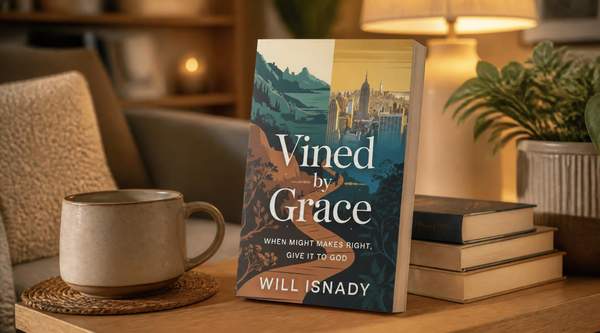
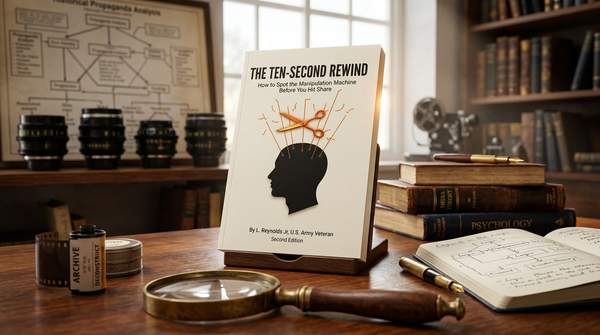
Winners of the 2026 Commonwealth Short Story Prize face allegations of using generative AI, according to Wired. Yet, all shortlisted writers deny AI use, a stance the Commonwealth Foundation confirmed after consultation, as reported by the commonwealthfoundation. The tension between accusation and denial regarding AI use highlights the difficulty in proving AI authorship. It creates a grey area, complicating accountability and eroding trust in literary accolades.

The tension between public suspicion and official denials reveals a profound crisis of authenticity. Even acclaimed works now face suspicion regarding their human origin. Literary honors suffer compromised integrity, not necessarily from AI use itself, but from vetting processes too weak to definitively prove or disprove it. Compromised integrity of literary honors, stemming from vetting processes too weak to definitively prove or disprove AI use, leads to lasting reputational damage.

Beyond Plagiarism: The Nature of AI 'Creativity'

AI's ability to generate text at scale introduces complexities beyond traditional plagiarism. AI plagiarizes faster than humans, creating new works that closely resemble existing ones, as noted by the virginialawreview. What appears 'new' from AI is often a sophisticated recombination of human-created works. The sophisticated recombination of human-created works by AI, which often appears 'new', raises fundamental questions about true originality and authorship.

The method of content generation, where AI output derives from vast datasets of human-authored material, challenges the very notion of creative contribution. AI output, while seemingly novel, derives from vast datasets of human-authored material. It acts as a derivative, not an originating force. AI output acting as a derivative, not an originating force, blurs lines between inspiration and imitation, complicating the assessment of true literary merit.

The Future of Authorship: Copyright, Value, and Authenticity

The legal framework for AI-generated content impacts authorship's future. AI-generated text is not copyrightable; it lacks original human authorship, a stance articulated by the Authors Guild. The inability to copyright AI-generated text, due to its lack of original human authorship, undermines human authors' economic incentive. It threatens to devalue the entire literary ecosystem by flooding it with unprotectable content.

The legal vulnerability of AI-generated text, which is not copyrightable, means a substantial portion of the burgeoning literary market, with 53 percent of books published in 2025 containing AI-generated text, rests on unstable legal foundations. The fact that a substantial portion of the burgeoning literary market rests on unstable legal foundations erodes publishing's traditional economic model, which supports authors through intellectual property rights. The literary market trades volume for value, accelerating a race to the bottom where legitimate authors struggle to earn a living.

By Q3 2026, publishers like Hachette Book Group will likely face increased pressure to implement rigorous, transparent AI detection protocols, or risk further financial and reputational damage from the ongoing devaluation of authentic literary contributions.

Related Coverage from Books

  • What are the ethical and legal issues of AI content in publishing?
  • The Pitt Dominates 2026 Astra TV Awards, Hacks Shines
  • What are the legal and ethical considerations for AI content creation?

Tags

AiPublishingAuthorshipLiteratureTechnologyCopyrightFuture Of Books
AF

Amelia Frost

Books & Media Writer

Amelia Frost is a Books & Media Writer for Film and Pen, where she covers books, storytelling, and the evolving media industry with a thoughtful, literary lens.

More from Books

Movie premiere scene with a red carpet, showcasing book covers morphing into film posters on a large screen, symbolizing successful book-to-screen adaptations.

Highest-Grossing Book-to-Screen Adaptations

The Hunger Games franchise saw its first film gross over $694.

Amelia Frost· Aug 23
A literary agent presenting a book manuscript to film producers in a high-energy meeting, highlighting the crucial role of agents in securing book-to-movie deals.

How Does a Media Rights Agent Help Your Book Become a Movie?

Creative Artists Agency (CAA) has packaged and sold approximately 175 book titles for film and TV adaptations this year, a fivefold increase from the same period in 2019, according to enewspaper .

Amelia Frost· Aug 23
An independent author thoughtfully considers two paths: one towards literary creation, the other towards market success, symbolizing the balance of writing and marketing.

Book Marketing Strategies for Independent Authors

Self-published authors should expect to spend 90% of their time marketing and only 10% writing, according to The Guardian .

Amelia Frost· Aug 22
Holographic books and a glowing audiobook icon in a futuristic library, representing the digital transformation of literary genres.

How Digital Publishing Reshapes Literary Genres and Why It Matters

In Norway, audiobooks delivered via streaming services surged from 10% of total sales in 2018 to 23% in 2021, according to platformization and publishing: changes in literary publishing .

Amelia Frost· Aug 19

Trending Now

1
Film crew of 'Marty Supreme' actively filming at Playland Park, showcasing the vibrant atmosphere of movie production at a recognizable local landmark.

‘Marty Supreme’ honored at LMGI Awards

Film Tv· 4 views
2
A futuristic sound design studio with holographic sound waves emanating from a DAW interface, representing the evolution of audio technology.

What are DAWs and how will they change sound design by 2026?

Behind The Scenes· 4 views
3
A group of diverse, emerging independent film directors, silhouetted against a dramatic sunset, symbolizing new talent and the future of cinema, holding film reels.

Top 5 Emerging Independent Film Directors to Watch in 2026

Film Tv· 5 views
4
AI-generated advertisement visualizes on a digital screen, showcasing superior performance metrics compared to traditional human-designed campaigns.

AI ads outperform human campaigns, reshaping creative roles

Advertising· 5 views
5
Diverse group of LGBTQ+ people joyfully watching screens, celebrating Pride Month with meaningful TV shows and films.

Top 7 LGBTQ+ TV Shows and Films Streaming for Pride 2026

Film Tv· 4 views
6
Futuristic film studio with AI interfaces creating characters and sets, representing the surge in AI-native film workflows and cost reductions.

AI-Native Film Workflows Surge, Promising Drastic Cost Cuts for Studios

Behind The Scenes· 4 views